


Why nonchalance isn’t the best strategy
Skinny jeans and side parts used to be the hottest things.
Now, it’s being “detached” and pretending not to care. This behavior is known as nonchalance.
Dictionary.com defines nonchalant as “coolly unconcerned, indifferent, or unexcited; casual.” Nonchalance isn’t just being calm, but more like a lack of caring. It’s when emotion and effort become cringey.
Although nonchalance is a huge trend right now, it’s not new. People have always acted as if they’re “too cool for school,” but Gen Z has popularized it.
Johanna Beck, a Latin teacher who has taught at MA since 2004, agrees with the increase of nonchalance students portray.
“I have recognized a change,” Beck said.
There isn’t a singular reason why people act this way.
“I think that what happens with nonchalantness is you protect yourself from the mess by not really trying,” said performance coach Brad Stulberg, on the Being Well podcast in a late January episode titled, “How to Create a Meaningful Life.”
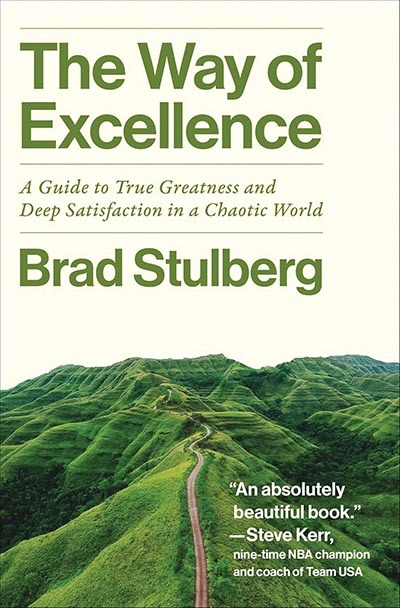
Excellence by Brad Stulberg (HarperOne)
Stuhlberg’s new book, The Way of Excellence: A Guide to True Greatness and Deep Satisfaction in a Chaotic World, argues that people need to be brave and risk failure, even heart-break, as the work toward goals that matter.
“If you don’t try your hardest,” Stuhlberg said, explaining why many people choose to appear nonchalant, “you automatically have this defense mechanism if things go wrong, like ‘I wasn’t really trying, that’s why I failed.’ Whereas if you care deeply and try your hardest you inherently make yourself vulnerable.”
Adding to that, psychologist Rick Hanson, a Being Well podcast cohost, explained four main reasons why people are nonchalant in a December episode titled, “Against Nonchalance: How to Embrace Caring in 2026.”
“First, nonchalance, not caring, is kinda cool,” Hanson said. “There’s something about it that just aligns with cool figures.”
Second he said, ”Caring exposes you to painful experiences… disappointment on the one hand and then what I’m calling ego threat on the other.” This is what Stulberg was arguing.
Third, “Lack of natural desire.” This means you genuinely just don’t care and don’t get why you should.
Fourth, “It’s what I’ll call protective defeatism,” Hanson said, defining this as thinking that you’ll never get what you want anyway, so why even try? It’s accepting your defeat as a way to protect yourself.
Whatever the reason, this way of relating to the world has lasting negative effects on youth.
Negative impacts on relationships
For starters, this can affect romantic relationships.
“Perhaps the most painful consequence is how nonchalance undermines relationships we actually want,” wrote Heather Z. Lyons, a psychology professor at Loyola University in Maryland, in a November blog post titled “Understanding the Nonchalance Epidemic” on the Baltimore Therapy Group website. “When both people are playing it cool, neither admits they care.”
Both wait for the other to text first, she wrote.
“Nobody wants to suggest making things official,” Lyons wrote, “and genuine desire or what one wants often goes unspoken, leading to missed opportunities for connection.”
This detached type of dating is often referred to by Gen Z as a “situationship”.
“This creates a cycle where two people who genuinely like each other convince themselves they don’t,” Lyons wrote. “Relationships built on shared emotional distance tend to be volatile and lack the trust and vulnerability that lasting connections require.”
Negative impacts on mental health
Nonchalance can also affect your mental health, according to Lyons.
“Acting nonchalant takes real emotional energy,” she wrote. “You’re constantly monitoring yourself, making sure you don’t seem too eager or invested. This self-surveillance is exhausting and can worsen existing anxiety and depression.”
Stuhlberg reinforced this idea in a January Substack post, “An Ode to Caring Deeply in an Era of Nonchalance,” in which he salutes people like 2025 Heisman Trophy winner Fernando Mendoza who aren’t afraid to show everyone how much they care.
“The motivation to move through life armed with nonchalance is understandable,” Stuhlberg wrote. “The world feels more uncertain and chaotic than ever. It’s hard enough to get by, let alone make yourself even more vulnerable by pouring your heart and soul into something—all the while knowing failure and disappointment are possible, perhaps even probable.”
This fear of disappointment could manifest in an academic setting with a student avoiding harder classes.
“But if you never give anything your all, if you never risk failure, then you never grow into who you really are, let alone express your true potential,” Stuhlberg wrote. “The hurt isn’t as bad this way, but neither are the joys. With an attitude of nonchalance, you sacrifice the pursuit of meaning, fulfillment, and excellence for short-term safety and comfort.”
In short, he pointed out: “Vulnerability is the cost of a super meaningful and textured life.”
So in this world, where nonchalance is trendy, and AI is taking over, experts who study nonchalance encourage you to embrace your humanity.
Don’t be afraid to make mistakes and feel everything, because that’s what makes us human.
