
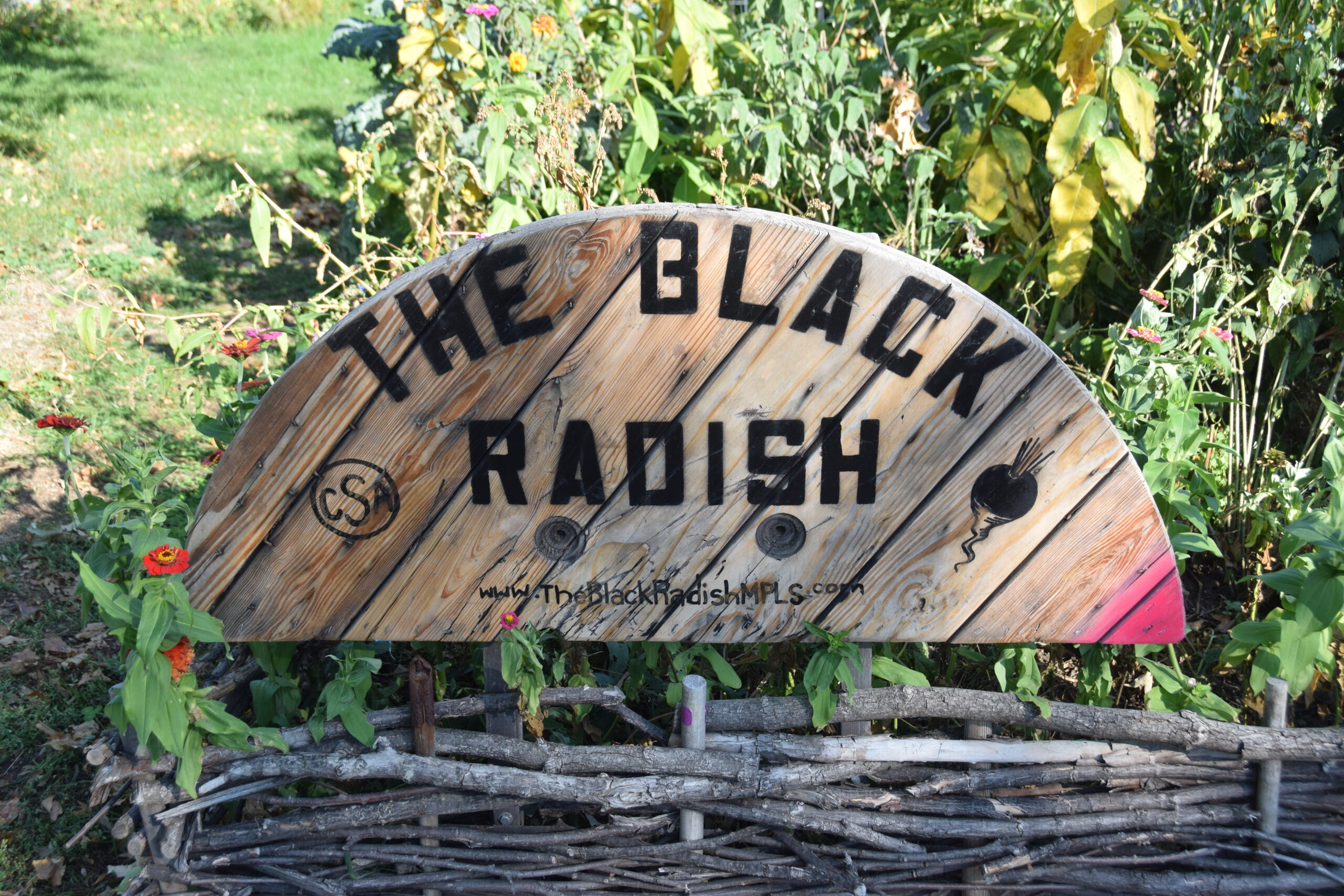

Neighborhood community-supported agriculture garden gives environmental benefits to city and community
10 years ago, on any given day one might have seen George, a South Minneapolis man, on his hands and knees, meticulously cutting his lawn with scissors and blowing errant leaves onto his neighbor’s grass. Today, vegetation hectically bursts out of raised garden beds in that same front lawn, interrupting the monotone chain of sterile yard work surrounding 3849 24th Avenue South.
“Ornamental green lawns are kind of a thing of the past. That same water that’s used for making nice green grass, you can use to make food, which is so much better for the environment,” said Carrie, who now lives in George’s former residence with her husband Jade, running an urban farm called The Black Radish.
“We were both educated and trained as artists and I think the vapidness of the art world, after a while just becomes meaningless, but in the garden, growing food for people and feeding people, and doing something that makes people smile on a daily basis as they walk by is really important to us,” said Jade.
The couple offers a “one-size-fits-all box for 16 consecutive weeks from early June through early September,” once a week crafting a handmade box of fresh produce, flowers, and recipe ideas for their dedicated CSA members.
In fact, Jade stated, “in these little Minneapolis neighborhoods, if you had one of these hubs, like our house, every five or six blocks, you could feed almost all of those people out of that one location.”
This points to the enormous upside of small city gardens, both for the environment and for the community as a whole. One example of the couple’s dedication to the wellbeing of the environment is that they are intentional about not using any harmful chemicals, herbicides, or insecticides. Instead, they make sure to use natural fertilizers that help yield healthier, more natural produce.
“One thing that I would say is better [about urban farming] is that Wednesday is the pick up day, and Tuesday and Wednesday are our harvest days, so everything is picked one day before, or that same day, whereas when you go to a supermarket it’s usually been there a long time,” said Carrie.
Furthermore, the produce doesn’t need to travel long distances on the back of a truck, which greatly benefits the environment. Instead, a contributing member can walk down the street and pick up a bag of fresh lettuce and tomatoes. This personal, face-to-face interaction between client and owner also helps form a beneficial relationship, setting a foundation for future giving and support.
“The community aspect is really important. I think we get to know our neighbors and share and provide for them. That’s been a really fulfilling and important aspect of it. I also think it helps people realize that they’re not investing in a house, they’re investing in a community. That’s a different take on things than we’re used to. There’s a different way to live a life where everything isn’t about the money, cause maybe it’s about the people around you too,” said Jade.
Feeding neighborhoods with produce that comes from someone’s front yard might seem like a stretch, but The Black Radish shows that urban farming and sustainable gardening has lasting benefits for communities and the earth.