

2014 Sochi Olympics proceed amid concerns about security, human rights
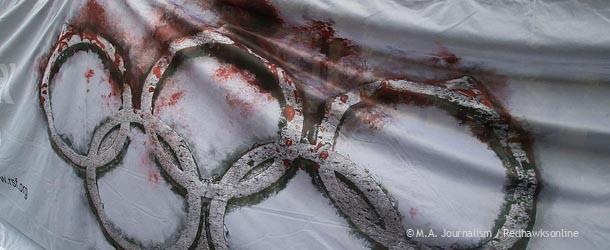
On Dec. 29 and 30 of 2013, two suicide bombings killed a combined total of 34 people and left many others injured. These weren’t soldiers targeted in war torn countries; they were civilians whose lives were torn away. And this didn’t happen in the volatile Middle East, but in Volgograd, Russia only 13 hours away from Sochi, the home of the 2014 Olympic Games. For an Olympic Games already under the shadow of controversy caused by global uproar over Russia’s humans rights decisions, the threat of LGBT terrorism only intensifies the storm.
No one has yet to come forth to claim responsibility for the killings, but they occurred only a few months after Chechen rebel leader Doku Umarov, leader of a terrorist group that calls itself the Caucasus Emirate, issued a message calling all Muslims to disrupt the Olympics. He called the Games “satanic dances on the bones of our ancestors” and allowed for any measures to be used. According to Chechen Leader Ramzan Kadyrov, Umarov recently died, but his hope of disrupting the Games hasn’t (though Umarov may have actually died before the December bombings occurred).
This threat is dangerous, but not surprising. In 2012, the United States Department of State reported that 659 were killed and 490 were wounded in 182 terrorist attacks in Russia. Chechen rebels committed a majority of these crimes.
The Chechen and Russian conflict has existed for centuries, but the current struggles have a more recent origin. After the dissolution of the USSR in 1991, the Chechen separatists declared independence from Russia. Unwilling to let them go, this sparked the 1994 First Chechen War. After two years of brutal fighting and massive losses on both sides, the Russian forces withdrew from the region for a short time.
In 1999, fighting broke out again. This time Russia came out victorious and established military rule over Chechnya. Umarov’s followers are currently fighting for independence from this Russian control through terrorist tactics like car bombings and suicide bombings.
Russian President Vladimir Putin has reportedly spent almost $60 billion on the 2014 Sochi Olympics, and much of that was on making Sochi into a fortress where the athletes and audience will be safe from the terrorist threat.
Moscow has mobilized tens of thousands of troops to secure the Games, and has created a 1,500 mile security ring around Sochi. But despite these measures, many around the world are viewing the Sochi Olympics not as a time of dreams fulfilled and records broken, but as a time of fear.
Many believe Putin’s precautionary measures will not be successful in creating an incident-free Olympics. For example, the US State Department put out a travel alert to Americans traveling to the games to “remain attentive” to threats, showing a lack of faith in the safety of American citizens during the Olympics. Other athletes around the world have also expressed concerns about the safety of the Games. Torah Bright, Australian snowboarder, said that, after the December bombings, “if the political position [in Russia] gets any worse … I won’t be risking my safety just for an Olympic Games.”
Bright is at Sochi, but her concerns are felt by many.
This fear is only a part of the controversy surrounding Sochi. Protests have already erupted, and boycotts have been mentioned because of the Russian stance on gay rights. Russia’s anti-gay legislation promises prosecution for anyone who promotes “nontraditional sexual relations” in front of minors.Many have criticized this law for limiting free speech, effectively banning public protests like gay rights parades.
On Jan. 15, the U.S. Olympic Committee said they would defer to the Olympic Charter about any protests that Olympians bring with them. The Charter bans political demonstrations by both athletes, and coaches. But not everyone will be following this. President Obama, for example, decided to include three openly gay athletes in the delegation to Sochi: tennis mogul Billie Jean King, figure skater Brian Boitano and hockey player Caitlin Cahow.
In addition, Obama (as well as the German and French Presidents) will not attend the Games, sending high-ranking officials instead. French President Francois Hollande didn’t provide an explanation for his absence, but German President Joachim Gauck did.
According to daily German newspaper Der Spiegel, Gauck told Russian authorities he would not be attending because of human rights violations and the harassment of Russian opposition political figures.
In addition, Viviane Reding, vice president of the European Commission responsible for Justice, Fundamental Rights and Citizenship, has also declined from attending the Games. Reding tweeted on Dec. 9, “I will certainly not go to [Sochi] as long as minorities are treated the way they are under the current Russian legislation.”
As the success or failure of the Game will heavily shape Putin’s legacy, he has tried to mend this negative view of Russia’s stance on human rights. He eased curbs on protests in Sochi, freed members of the Pussy Riot punk protest group and released former oil tycoon Mikhail Khodorkovsky, one of Russia’s most famous prisoners.
On Jan. 16, Putin said, “I am confident the Olympics will bring nations closer together and help strengthen friendship, trust and partnership around the world.” All of the controversies around Sochi lie on Putin’s shoulders, who only hopes the Olympics can go off without a hitch.
Considering the importance of the safety of everyone at the Olympics, almost everyone is rooting for that same thing. But this doesn’t change the air that surrounds these Olympics, an air already permeated with the fear of violence and the controversial debates on human rights.