
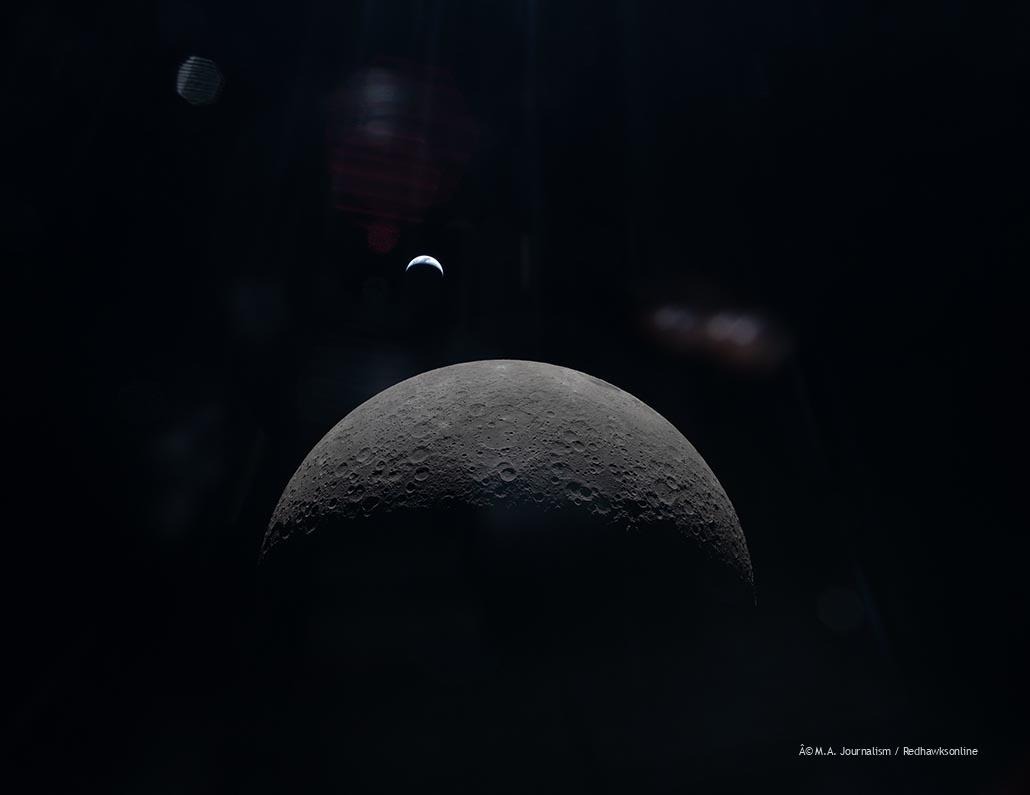

Eventual goal is moon landing
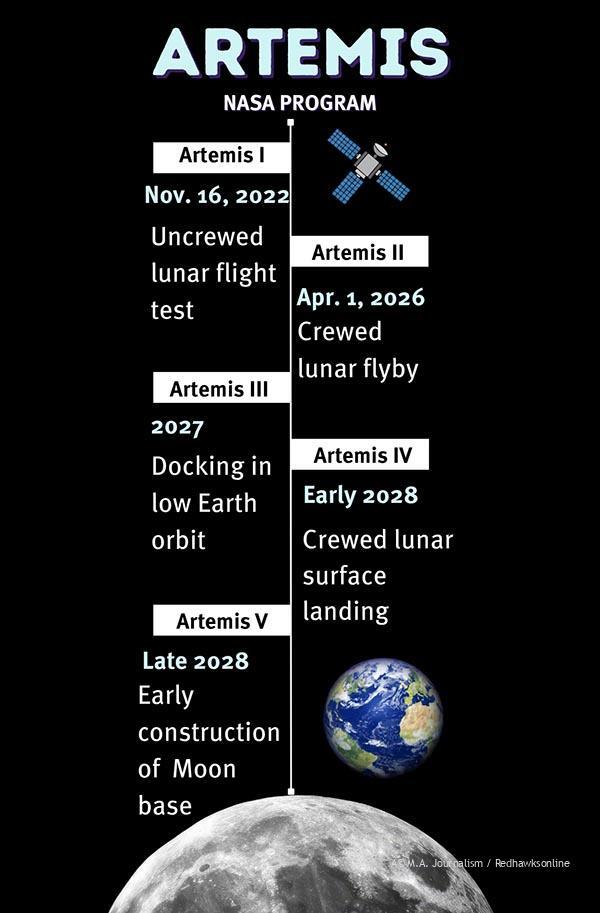 Launched on April 1, 2026, NASA’s Artemis II made history. This mission is part of the larger Artemis program to test the boundaries of space exploration—irrevocably influencing the future of humanity.
According to the E.S.A. (European Space Agency) and NASA, Artemis II was designed to determine critical spacecraft systems, such as heat shields, life support, and navigation.
Tests such as these are needed before future missions to see what is necessary to attempt a landing. But Artemis II was launched in orbit around the Moon, culminating in the furthest distance from Earth humans have ever been.
“One of the big purposes… is preparing for future human space missions to land on the moon again,” said science teacher Tim Swanson. “Their mission is to test a lot of the systems…like heat shields and orbital trajectories.” Swanson is a physics teacher and Astro-Club mentor at Minnehaha Academy.
Artemis II was not just about going to the Moon, but about making sure humans can travel safely into deep space for the future.
NASA hopes that this mission will provide information on how astronauts can handle progressing further into space, as well as ensuring the safety and conditions of later missions.
“NASA wants to learn how humans handle being out in deep space,” Swanson said. “If we ever want to go to Mars someday, there’s a lot we still need to learn.”
Another reason to return to the Moon is humans’ natural curiosity.
“Humans just have a lot of curiosity. We want to know what’s out there,” said Swanson.
With our ever-improving technology, many scientists believe they can learn more details, such as the Moon’s origins and how it has changed over time.
Artemis II also emphasizes the importance of humans venturing beyond the Earth. Robots can collect data and do many beneficial things, but they can’t do as much as a human can.
“Our eyes are so much more dynamic than cameras,” Swanson said. “Robots just can’t see what our eyes see; they can’t capture what it’s like to be there.”
Although Artemis II may have been used to collect important data and information, it also changed how people view the importance of Earth and exploration.
“A good example of using technology for good, to learn more and realize how special Earth is,” he said.
NASA will continue this journey step by step. Artemis II cleared boundaries, gained more information, and pushed humanity closer to visiting the lunar surface once again.
