

Private school students not protected by First Amendment rights in schools
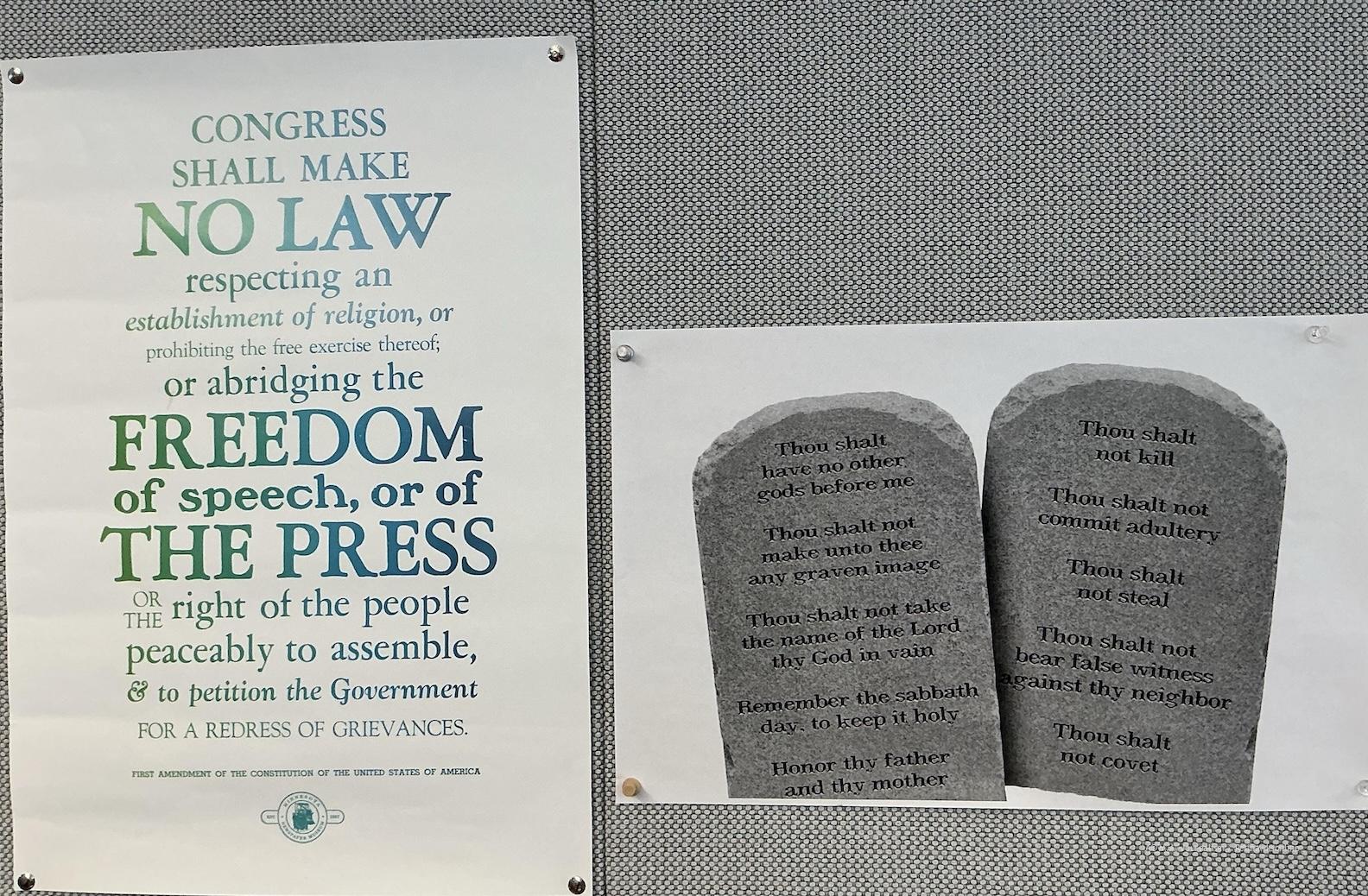
The First Amendment of the United States Constitution says thus: Congress shall make no law respecting an establishment of religion, or prohibiting the free exercise thereof; or abridging the freedom of speech, or of the press; or the right of the people peaceably to assemble, and to petition the Government for a redress of grievances.
The U.S. Government has made a promise to its citizens. The people are protected by law – as is their speech. That means that, besides specific instances, those in the U.S. can say pretty much whatever they want. That is, besides private school students.
The First Amendment protects those under its jurisdiction, which means that private schools, who are not funded by the government and therefore not government entities, do not gain the same rights as their public school counterparts. This means, centrally, that in terms of journalism, private school students can be restricted in what they express. These restrictions are due to school administrations, boards, or any person of authority who has some jurisdiction over the private school. If there’s a chain of private schools, for example, a story or speech can be restricted by anyone from the principal to the head of the board that oversees all the schools, depending on the issue.
In terms of journalism – admin can restrict speech by reviewing or censoring articles, photos, videos, or anything produced by a publication.
A person of authority within a private school can subject a published work to censoring in two main ways: prior review and prior restraint. Prior review, essentially, is when an administrator looks over a story or a work before it is published, an inspection. Prior restraint can occur in two ways: before anything is even drafted, a school implements limitations on what can be published; or, after something is drafted, the school censors it or edits it.
But why wouldn’t a school administrator want their students to have the same government-given rights in school as in life?
An administrator might have many reasons for this – reviewing the article — if something harms the school’s reputation that limits the school’s growth or causes financial loss, there’s good reason to consider editing the article to prevent pain. Or, if there’s something that is incorrect for some reason within the article, an administrator might want to initiate a review of the article before it is published simply for accuracy.
On the flip side, though, an administrator might censor an article for personal gain, like editing the article to further themselves. Or the school might only permit stories that praise the school entirely, limiting any negative comments or questioning of the school’s integrity, preventing reform. Limitations on publications aren’t without reasoning, but it’s important to consider what might happen if too many restrictions are implemented; students are unable to express themselves, and journalists aren’t able to practice their craft to the fullest extent. And in either case of prior review or prior restraint, students will often, over time, begin to self-censor their work before it is even published. This would limit their creative and literary aspirations, as they have the preconceived notion or assumption that their article will be censored, so they don’t write or publish it at all before it can even reach an administrator.
The issue with prior review and prior restraint is not that the school has the power to limit student publications – there have been reasons expressed for the good of this notion. The issue is that the power to censor limits growth. If uncontrolled, prior review and prior restraint could over time limit any growth of students’ literary and journalistic skills, and the school’s growth in reform. Journalism is a powerful vehicle for voices of the unheard to be heard, and excess of censorship has the potential to silence those unheard voices. Dissent is the key to change, and a school won’t know what isn’t working unless students say something about it. But if their representation is gone, that being the newspaper, there’s no chance for change at all.
Students who wish to act against prior restraint and prior review can start working with the SPLC. The Student Press Law Center is the nation’s legal organization dedicated to protecting the rights of student journalists – with no charge. They offer a hotline for journalists who are experiencing prior review or prior restraint, and have numerous resources on their website. Students can also push for schools to accept New Voices Legislation, which has been accepted in Minnesota. Student press freedoms only protect charter and public schools, however, so private schools must independently allow the legislation to be passed.