

As gardening blooms across the world, see how it benefits people’s lives
Your last meal likely traveled 1,500 miles to get to your plate – the equivalent of flying all the way to Florida just for dinner.
“It’s like my food is going on a vacation,” said senior Alex Salo. “I’d rather eat something from my own backyard.”
Salo is a primary example of an at-home gardener.
“I grow a lot of herbs, have a tomato plant, and take care of a large amount of flowers,” said Salo. “I even fostered a grapevine again this year to go over our canopy. I’m pretty proud of that.”
Many Americans, aside from Salo, are interested in the hobby, considering more than half of U.S. households participate in gardening: approximately 71.5 million households and 185.9 million people, according to “The Home Growing Report”.
The numbers reflect a growing national interest, but gardening’s roots are planted in personal history.
“I was the oldest boy of 8 kids growing up in the Appalachian Mountains with my mom and dad,” said social studies teacher Wesley Rohrer. “We grew all of our own food. I don’t remember going to a grocery store.”
Being in touch with nature through cultivating plants and growing produce at such a young age is truly eye-opening.
“If you’re not growing something, it’s very difficult to be in touch with natural seasons in the same way,” said Rohrer. “I would say that nature, in my view, is a necessity”.
The benefits of staying connected to the environment through these hands-on experiences are tremendous. One reason many are drawn to gardening is its nutritional value.
Each hour after food gets picked from a plant, it loses nutrients. After fruits and vegetables in particular are harvested, they continue to breathe, a process called respiration. Foods release heat and moisture during this stage, leading them to lose essential nutrients.
“With gardening, you can start reducing [your] carbon footprint,” said Salo. “Items in a grocery store go through a lot of transportation, and you can never know for certain how tampered with or how many preservatives or pesticides might be in the produce.”
Agricultural extension and food network data reveal that roughly 90% of the conventional produce in average Minnesota grocery stores originates from more than 1,000 miles away.
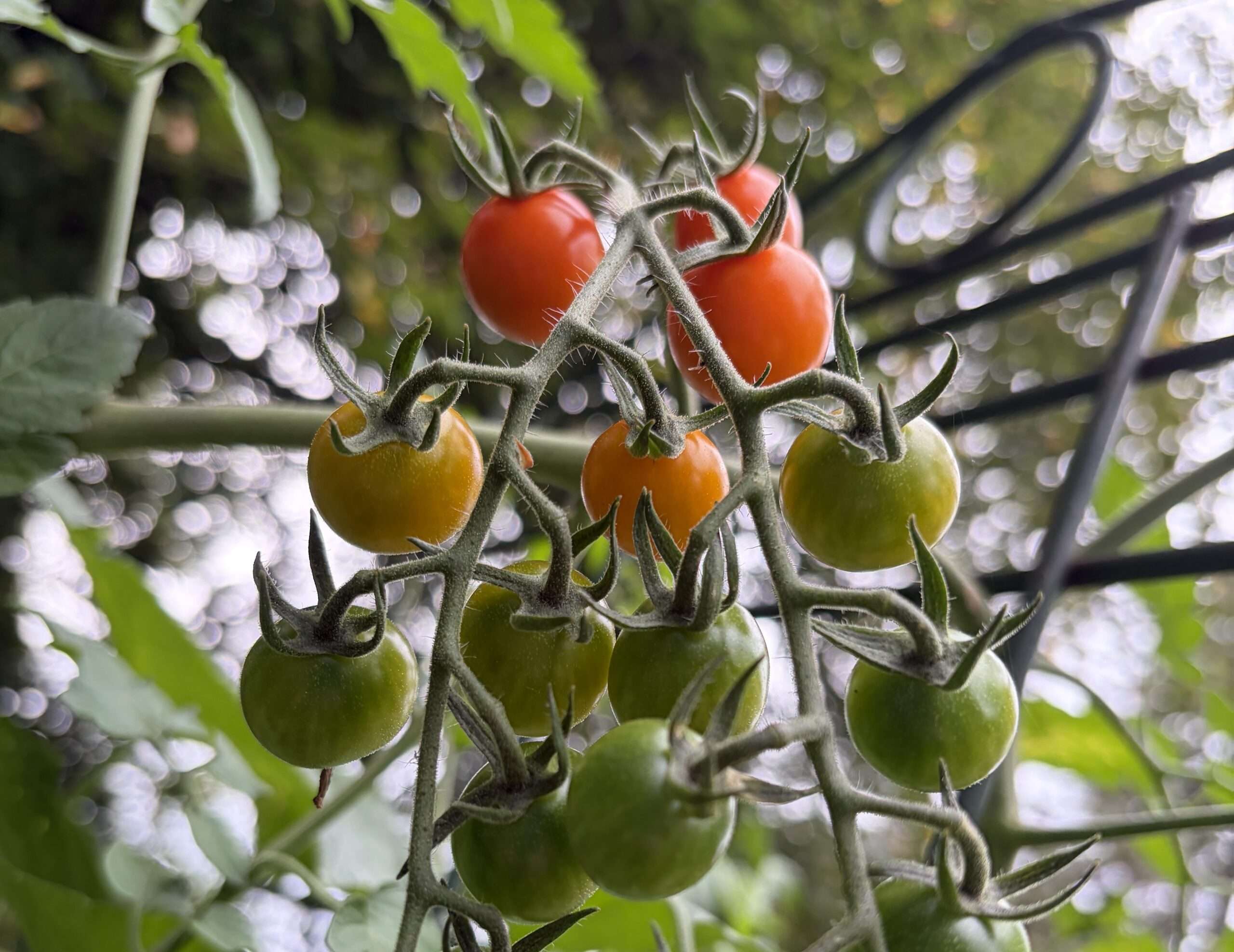
In other words, food loses its vital nutrients during transport, making locally grown food significantly more nutritious and undeniably more affordable. “I paid 4 bucks for each tomato start, and now I’m getting dozens of tomatoes,” said Rohrer. “It’s a great cost path.”
With a start-up cost of $4, compared to $5 per pound at an average Minnesota grocery store, growing tomatoes at home pays for itself almost instantly.
“It really is cheaper,” said Salo. “If you have the resources to do it, you might as well.”
Admissions Counselor Caleb Taylor brings up another reward of gardening: the mental health benefits. “Being able to grow food and plants in your backyard is super nice,” said Taylor. “It’s actually really relaxing.”
An RHS Well-being Study showed that people who garden every day have well-being scores 6.6% higher and stress levels 4.2% lower than non-gardeners. That is to say , everyone could benefit from starting a garden.
“Almost everybody can do it,” said Rohrer. “Do it with one plant, do it successfully, see if it’s something you enjoyed, and then decide if you want to do 2 buckets next year.”year.”
