
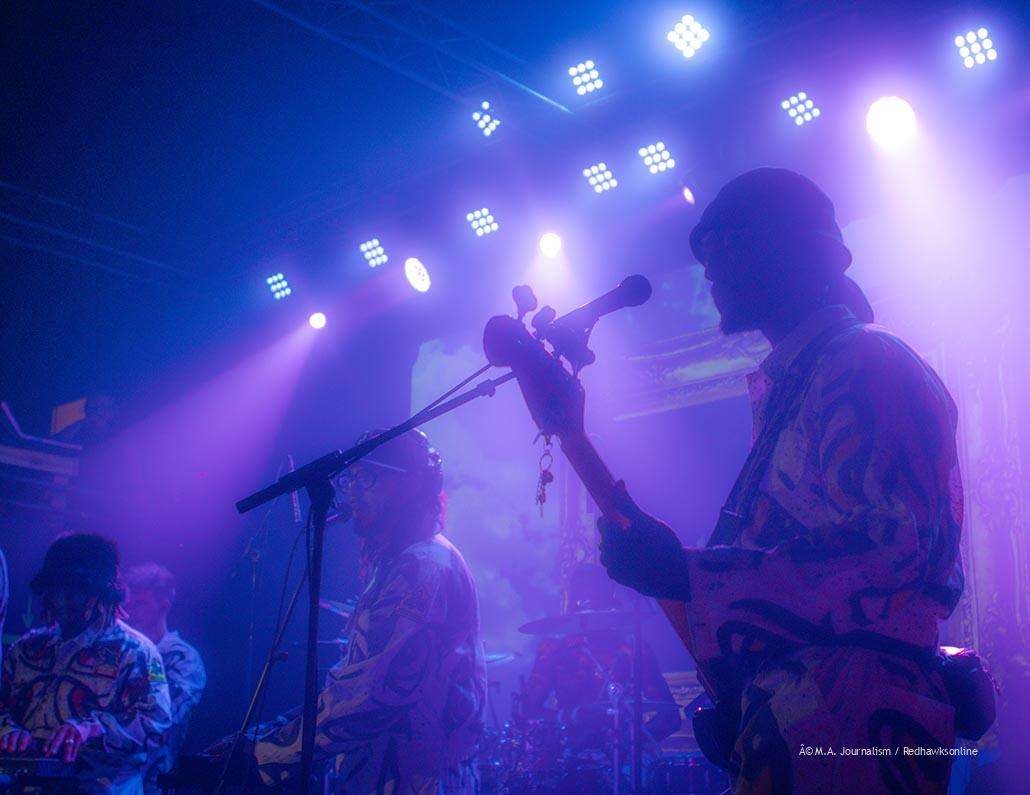

The live and local music of the Twin Cities and why it matters:
What comes to mind when you think of the Twin Cities? Is it our food? Politics? Lakes? Well, if there’s one thing that ought to come to mind, it’s the thing we’ve consistently impacted and helped grow: music. From worldwide funk-rock icon Prince, to hardcore punk band Hüsker Dü, to folk legend Bob Dylan, to alternative-rockers The Replacements, the Twin Cities boasts an incredible catalog of acts. “Our music scene is incredibly diverse,” said Diane Miller, musician and host of The Current’s “The Local Show.” “Our community embraces the arts, embraces our neighbors… [embraces] being bold and cutting edge.”
M.A. senior and local musician Obadiah Gamble has experienced the support of the music community. “Everybody is so welcoming of new ideas, new bands, new artists, new musicians,” he said. “I feel like everybody has a place. All these people come from different backgrounds but come together to play music.” The cultural diversity of the Twin Cities has certainly played a substantial role in molding its one-of-a-kind music scene.
However, not only the people of Minnesota have done their part, the government has as well. “We are a rare state that has it written into our constitution that we fund the arts,” said Jade, host on 92KQRS, founder of the Minnesota Music Coalition non-profit, and Minnesota music icon. “We have grants and funding so that people can make money while doing their art,” Jade said.
In a world that is increasingly favoring AI generated entertainment, making sure that the true artists can thrive is essential to keeping creativity alive. But it isn’t exactly a secret that Minnesota’s, and the rest of the United States’, economy is struggling a bit. With ticket prices rising due to inflation, and often just flat-out greed.
Not to mention the drastic effects that the Covid-19 pandemic had on consumers and small businesses alike. All while across the United States “legacy media is dying, views and algorithms are fickle” said Jade. “Live Nation builds competing venues and teams up with Google’s AI to monopolize ticket optimization online.”
In December, the federal government’s aggressive approach to immigration enforcement, called “Operation Metro Surge,” caused fear and provoked protests. “[It] played a role in really setting back our local economy and affected a lot of businesses, including music venues,” said Miller. “People were just scared to leave their houses.”
But Minnesota always bounces back. From the Covid-19 lockdown, to 2020’s civil unrest, The Land of 10,000 Lakes always seems to find a way to regain its footing in one way or another. “I can’t even begin to describe … how many bands and artists are active out there, creating, performing live, going out and supporting people,” Miller said.
It still seems that the true music community is always ready to show up in support of people. Community is one of, if not the most important aspect of live music. It’s what keeps people coming back to shows.
But trying to find your place doesn’t always seem like a walk in the park. So where do you even begin? “[Follow] accounts on Instagram that you enjoy, and interact with those accounts” Miller suggested, an idea echoed by Jade. “Make a community online, and then find out where those artists that you enjoy are playing, and go pay for a ticket… stand up front, clap loudly!”
When faced with something new, finding familiarity can be the light in the dark. “I have a friend and whenever either of us find a concert happening, we like to invite the other and we’ll see it together,” said junior Ava Doody. “We both get exposure to each other’s music tastes and we get to listen to a wide variety of stuff.”
But starting from scratch can work just as well. “Make some friends, go to a show and meet, like, two people!” Gamble said. “I would get one person’s Instagram, but they would know like 20 other people that were also really cool.”
“Community takes time, but it also takes a bit of courage to put yourself out there,” said Jade.
But don’t be too worried, Minnesota is pretty friendly. In the words of Prince, “the cold keeps the bad people out.