
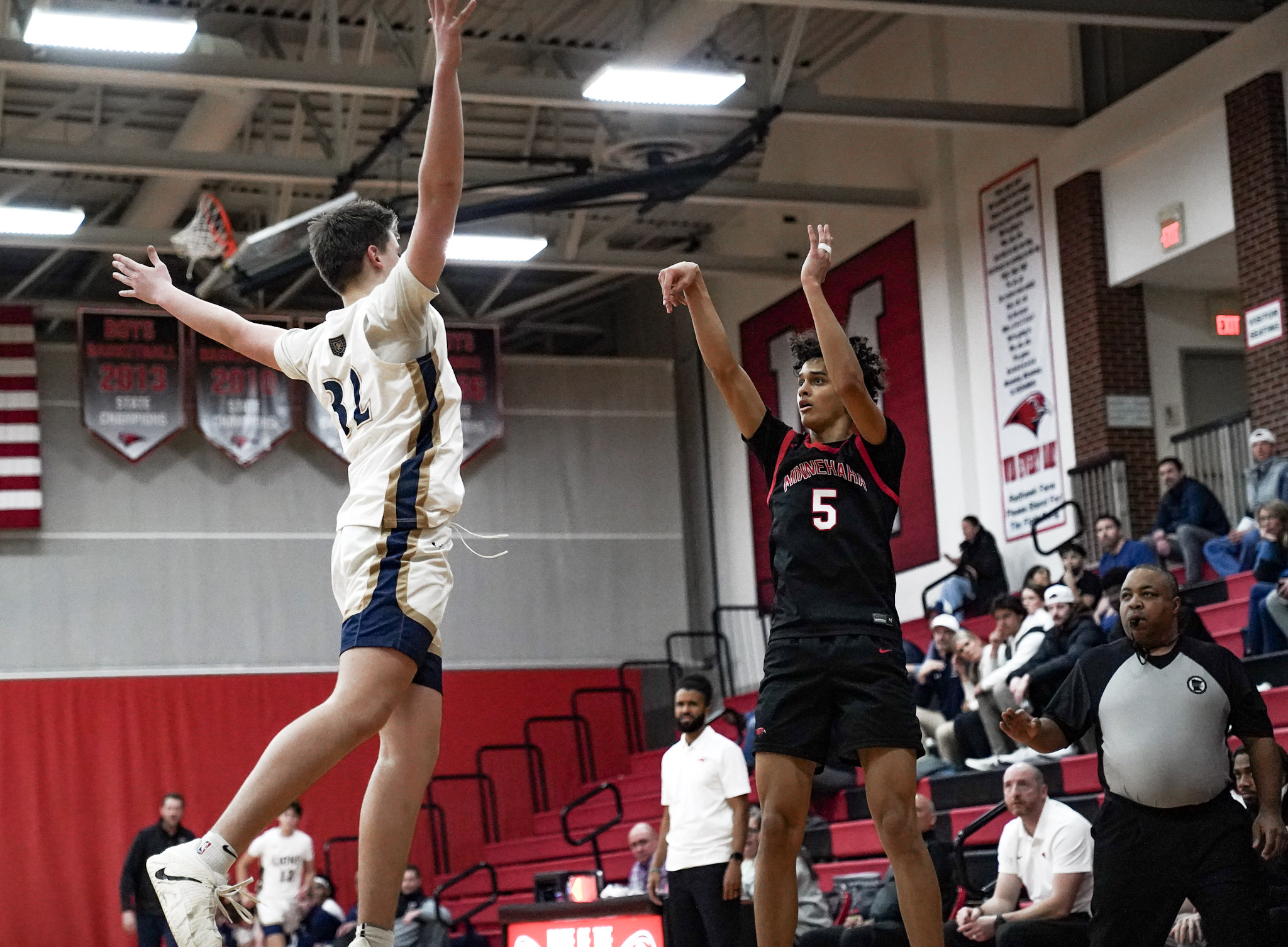

Youth sports used to be accessible to all. Kids got to try new sports for free with programs like learn to play, which gave families the resources to put their kids in any sport for free.
But now, it seems like youth sports are a pay to win scenario, the best players in the game come from families with money. With pro leagues monopolizing the best youth leagues, or private equity encroaching, free learn to play programs have seemingly disappeared.
With the money in the market, youth sports doesn’t have the brightest future ahead. Youth sports aren’t for the youth anymore; they are a business.
Even in the present, youth sports seem to be doomed. Private equity hasn’t fully taken over, nor have pro leagues snatched up every little league in the country. Yet, youth sports are still extremely spendy.
The first explanation could be the rising cost of almost everything in daily life. It’s no secret that prices are rising for basic things like groceries, everyday essentials, and more, so it would make sense that the cost is rising for sports gear and practice facility fees.
But it seems that youth sports have reached a cost that exceeds normality. The latest and greatest sports gear can run families thousands of dollars, even used or older models can still cost hundreds of dollars, leaving kids out of sports.
According to the Aspen Institutes State of Play, “Only 38% of kids ages 6 to 12 played team or individual sports on a regular basis in 2018, down from 45% in 2008”
Rising costs play a large role in this decreased participation.
According to the same report “In 2018, 22% of kids ages 6 to 12 in households with incomes under $25,000 played sports on a regular basis, compared to 43% of kids from homes earning $100,000 or more. Kids from the lowest-income homes are more than three times as likely to be physically inactive.”
Since 2018, sports have only gotten more expensive.
According to one of the Aspen Institute’s latest parent surveys “The average U.S. sports family spent $1,016 on their child’s primary sport in 2024, a 46% increase since 2019,”
A game of basketball used to be something played in the streets with neighborhood kids, has turned into travel teams, bold and expensive court shoes, and money down the drain for prep leagues and tournaments.
Youth hockey has turned into prep schools, expensive top of the line gear, and international tournaments like the highly sought after Brick tournament where the best 10 year olds begin to make names for themselves, setting up a path to a professional career in hockey.
Youth sports has become a cutthroat competition for who can spend the most money to become the best athlete.
Club teams leave families spending thousands annually to allow their kids to get better in their sports off seasons.
Impact at M.A.
Students at Minnehaha have felt these costs heavily.
Junior Enzo Bertranou who plays soccer at both the high school level as well as the club level, said he pays upwards of $6,500 dollars a year for his sport, a price he says is extremely unreasonable.
“Players are scared to play and they know that they can get cut. So whoever’s parents are willing to pay the most for a good team, for tryout fees and travel fees, that’s the coach’s favorite,” said Bertranou. “Oftentimes kids with less economic opportunities and their parents can’t support them in different teams. They get left out and there’s a lot of wasted talent. It’s a huge problem with soccer in America.”
Winter sports also cost a lot, with alpine skiing costing a surprising amount.
“It’s between $30,000 and $45,000 a year just for Alpine. You spend 30 grand on equipment and team fees before you start going to a race. And then every race is about $1,000 a weekend. for your ticket lift pass and registration for the race.” said junior Alex Salo.
Salo races for Buck Hill’s ski racing team in the off season, and is one of Minnehaha’s best Alpine skiers. This level can come with crazy costs for team try outs, lift passes for practices, and registrations for races in different states.
“It’s absurd. It’s too much money,” Salo said.
The costs associated with the sport can lead many to not join it.
“I joined it one year, but the only reason I only joined it one year is because it was too expensive to join the years prior,” said senior Ruby Brown, who joined the Alpine ski team in her senior year after doing research on how to minimize the cost. “I scoured the internet to find super duper cheap stuff, and I got all my stuff for like 100 bucks. But that’s, like, so rare”
Brands are the ones to blame for rising costs. It seems like every week a brand drops a new piece of equipment everyone must have to be the best in their sport.
“It’s not at all the coach’s fault or the player’s fault.
It’s the ski company’s fault who charge thousands of dollars for skis. And, the season passes, which are like, $700, $600. Brutal,” Brown said.
Junior Nathanim Tekle said her former club volleyball team cost upwards of $4000 a season.
“We did have scholarships at the clubs that I did. So [my] family just ended up paying around, like, $1000 at club season, not the regular $4000, like we can’t really afford to be paying $4000 per season,” said Tekle. “It’s very ridiculous to pay $4,000 for a club. And I think just in general, too.”
Brands taking action
Even with the struggles faced by many in sports at the youth and high school level, all hope isn’t lost.
In March of 2025, ESPN and Disney announced an initiative called “Take Back Sports”. The initiative aims to spotlight the problems keeping kids out of sports, these issues include cost, accessibility, and education.
In 2026 ESPN and Disney renewed the year long initiative with a 3 week long ‘Youth Sports Week’.
This program included ambassadors like former NFL players Peyton and Eli Manning, as well as Golden State Warriors point guard Stephen Curry playing roles in public service announcements.
Other items include collaborations with YMCA, with select locations across the US hosting sports sampling sessions, getting kids engaged with new sports. Along with collaborations with YMCA, ESPN is partnering with the National Football League (NFL), with youth-focused programming during NFL games.
ESPN is also upping its digital resources, in the official press release for the initiative ESPN states “ESPN has also introduced a youth sports parenting quiz designed to help families identify their parenting style and provide actionable guidance to support a more positive and effective youth sports experience.
Expanded tools from the Positive Coaching Alliance will be available on TakeBackSports.org for parents, coaches and communities, including Spanish-language resources launching during Youth Sports Week. The Spanish version of the website, TakeBackSports.org/es, will further the reach and impact of the Take Back Sports initiative. The website also will provide Spanish speaking parents and coaches with access to information, videos, a sports parent quick quiz and Spanish resources, including Five Tips for Sports Parents (“Cinco Consejos Para Padres Deportivos”) to help bring more joy and less pressure to youth sports communities everywhere.”
The addition of digital resources in Spanish helps to include more kids and families in the sport, something that hasn’t always been present.
Dicks Sporting Goods has also made their own approach to tackling the problems in youth sports.
Through their community outreach programs Dicks offers scholarships for youth sports teams up to 25,000 dollars.
This scholarship can go towards equipment, fees, and more, offering kids a chance to play sports when they otherwise couldn’t.
Dicks also offers resources to help teams build websites to organize teams or fundraise.
In the end, youth sports may be struggling, but it isn’t ruined for good. With big sports media brands like ESPN and Dicks Sporting Goods stepping up, it encourages others to do the same, combatting private equity’s gaining role in youth sports.
What was once a way for kids to gain new community and skills, has become a competition for whose parents can shill out the most money. The money put into the youth sports industry, and how it has grown over the past few years, shows there might not be any going back to the good old days, but there is a way forward.