

The reality of falling into fast fashion
With summer just around the corner, having trendy outfits feels like a necessity. The everchanging waves of trends create a sense of urgency in consumers, pushing people to constantly browse for new items with the intention of staying “fashionable”. Minnehaha students recognize this unattainable cycle that seems to be the new norm.
“Stores like Aritzia, ALO, and Lululemon are so expensive,” said junior Katie Jane Guild. “I think especially for students it is hard to buy a ton of new clothes from these stores.”
According to a survey done by CNBC in 2025, clothing prices were “on average $17 higher this year (2025) compared to last.”
Being a teenager in the 21st century comes with pressure to conform to the trends along with the desire to spend exceeding amounts of money on pieces of fabric.
An easy fix to all of these problems seems to be buying into the fast fashion industry.
“I have found super cheap clothing online,” said Guild. “Places like Shein are just as cute and trendy”.
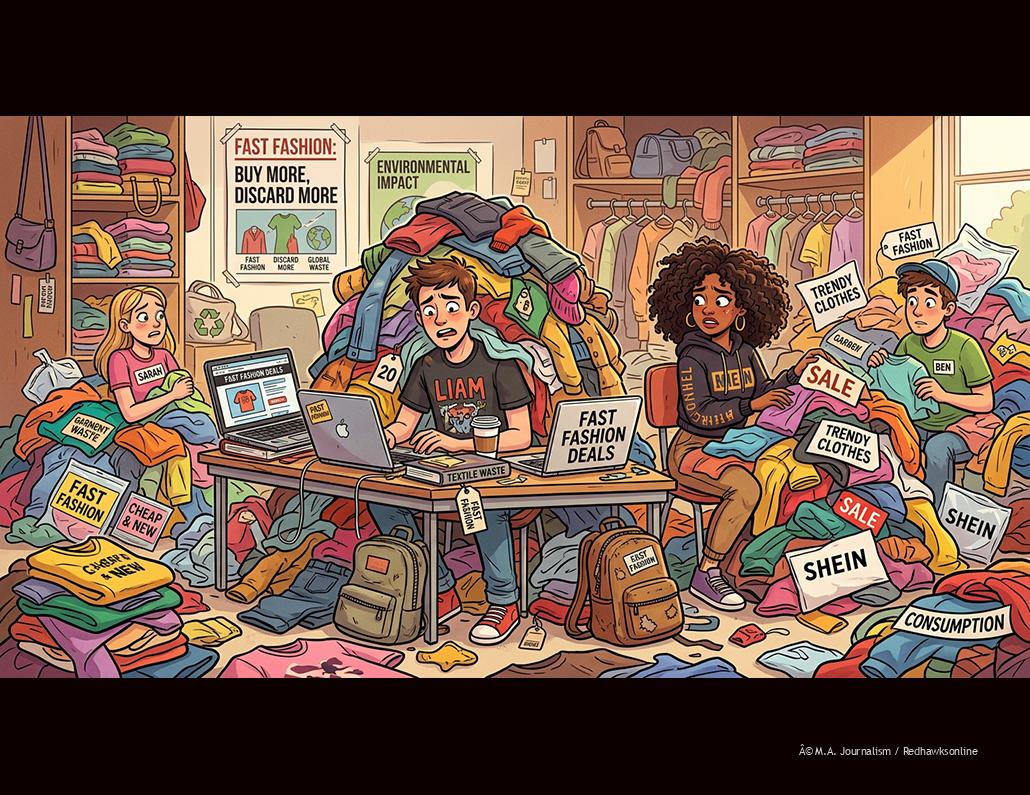
Fast fashion seems to be a loophole for consumers who desire quantity at less expensive rates, but the cost of buying into the fast fashion industry is much higher than the sticker price.
“Marketing can pull us into thinking more is always better,” said Spanish teacher Anne Calvin. “The question is how much do I actually really need?”
Spanish four students are currently in a fast fashion unit which breaks down many of the consequences into buying from mass-manufacturing factories across the world. Fast fashion is a system in the clothing industry where brands quickly design, manufacture, and produce cheap items following the latest trends. There seems to be no issue with this practice at a quick glance but underneath the surface there are shocking truths.
“Fast fashion has far reaching consequences,” said Calvin. “For human rights, for the environment, and for our consumer tendencies.”
Eliot Pryor reveals in his article, The Dark Side of Fast Fashion, that “92 million tonnes of discarded garments find their way into landfills, out of the 100 billion produced every year.”
Garment workers tend to be cut short of fundamental rights considering there are “approximately 60 million factory workers worldwide yet less than 2% earn a living wage” (helm).
“I think what a lot of people do is buy things online that they think are cute at the moment,” said Guild. “The problem is that a lot of the time you only end up wearing these cheap pieces a couple of times.”
Fast fashion companies use this to their advantage. Many brands encourage their customers to order clothing for a “one time wear”.
For example Shein offers Women’s Pattern Print T-Shirts for $1.38, describing them as “sustainable for daily wear”.
China generally seems to be the hub for fast fashion. It is both a large producer and has a large consumer market.
There are numerous solutions to reducing the popularity of the fast fashion industry. One of the most effective ways to do so is by using apps, websites, and organizations that help consumers find more ethical ways to shop!
Buying off of apps like Depop, Poshmak, and ThreadUp and great examples.