
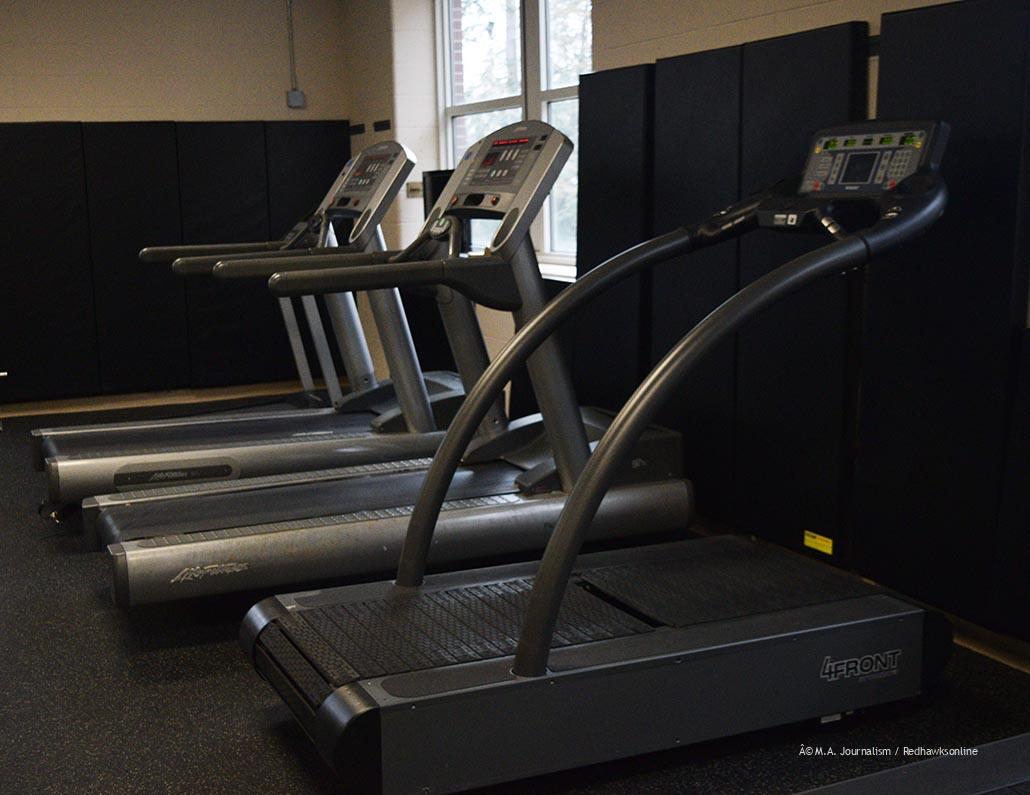

If good intentions become obsessions, physical exercise can bring negative results
“Over the summer, I really wanted to train to get good at cross country,” said sophomore Noah Peng, a member of the Minnehaha boys’ cross-country team. “And so I kind of went way too hard every day, and by the time the season rolled around, I was kind of burned out, and I was dealing with some issues like shin splints.”
Peng is not alone.
A 2013 study shows that 56% of physically active people experience an exercise-related injury. That means over half of the people trying to be healthy end up getting hurt, possibly leading to long-term effects.
There are three main places when being healthy crosses a line: training, recovery, and diet. Knowing when to stop could prevent damage in the long run.
Many athletes, like Peng, find themselves pushing too hard and facing the consequences.
“We hear a lot about how exercise and movement is healthy, and of course it is in moderation,” said Emma Deihl, a licensed professional clinical counselor. “When it becomes unhealthy is when it’s so rigid that we can’t allow ourselves to take rest days or we feel like we have to burn a certain number of calories or we have to exercise for a certain amount of time, and it can get to a point where it can be really debilitating for people.”
Overtraining, in fact, can lead to an athlete’s season coming to an early close.
“Because of the shins splints, I had to take a break from cross country for like a solid month,” Peng said. “That really set me back when the races were rolling around because I couldn’t really participate in them, and when I did participate, it wasn’t to the level that I thought I was capable of.”
The practice of overtraining can be a result of a bigger underlying issue, and one that is not always like Peng’s. Actually, it is often the reflection of how someone views themselves.
“In terms of people coming into the weight room, there are some people that can fall into what’s considered a body dysmorphic disorder,” said Brandon Peterson, Minnehaha Academy’s strength and conditioning coach. “So similar to anorexia, but the opposite way, where they see themselves as small all the time. And that can lead to some unhealthy habits in terms of really overdoing their workouts.”
Many athletes view themselves as committed the more time they spend working out. They often mistake addiction for commitment. A 2017 study on compulsive exercise says that the committed exerciser has boundaries while those who are addicted see it as a central part of their lives.
“I think, just in general, some of the obsessions that people can have, whether it’s diet or their exercise routine or whatever, can kind of lead to [these] unbalanced priorities in their life, right?” Peterson said. “So people prefer to go to the gym instead of hanging out with friends or being with their family.”
Priorities being shifted is just one of the many warning signs of addiction and obsession taking over. In fact, sudden change in appearance, avoiding social activities or regular hobbies, and issues in relationships are part of the long list.
Deihl said that another warning sign is “the amount of time they are thinking about it, not even just engaging in the behavior. For example, if I’m working with somebody who maybe exercises excessively, it might be something where they’re constantly planning like, ‘okay, when am I going to get my workout in, how am I going to make sure I do enough exercises, burn enough calories, spend enough time?’ There’s just a lot of planning and it’s taking up a lot of their brain space.”
Creating boundaries and goals can help. By making a plan, it makes it harder for obsession to take over and cause issues.
Deihl said it helps to set “reasonable limits” and “to set goals around limiting those excessive behaviors.”
Over-recovery?
Overtraining is not the only place that goes too far, in fact, recovery can also cause damage if gone too far.
The practice of ice baths to restore the muscles, for example, is not a new practice to athletes. It is a habit many condone and use on a daily basis.
It has many benefits such as more efficient healing and mood boosts, but the risks should not be taken lightly, especially when they include hypothermia, frostbite, and circulation issues in the long run.
Some athletes take this practice to the next- level and brag about it on social media such as SnapChat and Strava, a social platform for runners, cyclers, hikers and anybody to track their fitness and activities as well as share with followers or the public.
“It turns out the reason I keep getting hypothermia is because the water was in fact cold enough, the thermometer just needed new batteries,” a student athlete at a local school writes on Strava.
This caption accompanies the 25 minutes he spent getting his heart rate as low as possible, testing his body’s limits in an ice bath.
On some days, he will spend as long as 47 minutes in the cold plunge, seeking healing. And in just five minutes, his core temperature will drop and continue to plummet as he deliberately threatens his health in the hope of restoration.
Even experienced users agree there is a place to draw the line.
“When you’re rushing into it too much, or doing it in a way that is too hard on your body, hypothermia is probably the main danger if you do it for too long,” said junior Emmett Morse, an All-State cross-country runner for Minnehaha and “pro” at the chilly practice. “So paying attention to your body cues and not trying to override that too much [is important]. You do have to work a little bit to fight against your body, but it’s keeping the balance of not doing too much of that.”
No amount of promised recovery is worth putting your body in deliberate danger, risking everything for one ice bath, health professionals said.
The reason for the risk again is obsession. The pressure that consumes nearly every athlete at least once: to be the best, to bounce back the fastest, and the need to do whatever it takes.
The question is: when does being healthy become unhealthy?
“Anything taken to an extreme can ultimately become unhealthy,” said Peterson.
On the contrary, recovery is essential for injured athletes such as Peng.
“[It] definitely just being consistent with my physical therapy and stretching,” he said.
Diets taken too far
Setting reasonable limits as an athlete is not limited to training and recovery. Some athletes can also run into trouble obsessing over their diet.
It is a helpful tool in people with orthorexia as well as addiction to training, an unhealthy obsession with what one consumes.
“There’s not an official diagnosis for this, but it’s commonly discussed in literature and it’s called orthorexia, which is essentially somebody who is very rigid about their eating habits and wanting to eat ‘healthy’,” said Deihl, an expert in helping those with eating disorders.
Finding a healthy middle ground is essential.
“I recognize that moderation is important and I really try to help my clients practice eating everything in moderation, not labeling certain foods as good and bad,” Deihl said. “I think that can be really tricky for people who have more of an orthorexia presentation where they feel like ‘I have to eat only whole foods.’”
Consulting a dietician or general physician is best when it comes to uncertainty about what you put in your body, and how you can best define moderation.
Keep ‘healthy’ healthy
Not only is moderation a beneficial habit for food, but also in all three of these common health obsessions.
While not every story of overtraining or overpushing has a happy ending, Noah Peng’s did.
“I did put in a lot of miles over the summer,” he said. “So my work there definitely paid off when it counted at conference, and I was able to just be a part of that experience, which was great.”
Peng said he was proud that his efforts secured him a place as an alternate at State.
If you or a loved one have any concerns about addiction or unhealthy obsessions, experts urge you to reach out to trusted help, you are never alone. The fight for keeping “healthy” healthy, as Peterson puts it, is a hard journey, but with support change can come — and that’s worth sharing on Strava.