
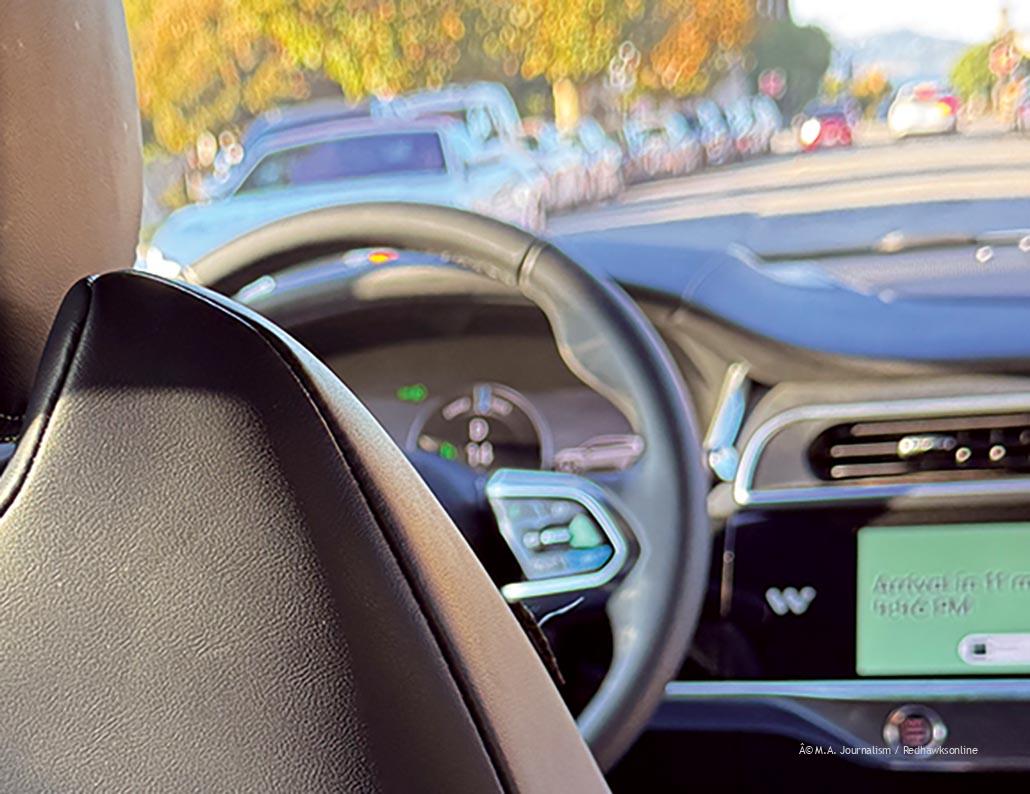

What if cars drove themselves? I used to think about that a lot, being a big sci-fi fan. But I don’t have to ask anymore: they can and do. The new Waymo LLC, originally a Google project, has begun manufacturing completely self-driving cars. These new cars are most prominently used as taxis / Ubers in large California cities, such as Los Angeles and San Francisco.
While Tesla’ s self-driving relies on cameras mostly for AI self driving, Waymo’s AI doesn’t rely solely on them. Waymo cars are using LiDar, a laser detection system, radar, commonly used to detect things using radio waves, and other scanning technologies that have not been used in self-driving services in the past. The only current issues are
Riding in these cars is quite the experience. The app encourages you to not sit in the driver’s seat, even if you’re the only person riding. It’s strange to be in a moving, functioning car while no one sits in the driver’s seat. The car is actually pretty smart (It honestly drives better than most humans.), driving exactly the speed limit and constantly scanning for any obstacle, plus it prevents distracted or intoxicated driving which is dangerous.
Although I am heavily anti-AI, the training that makes these cars so smart is kind of cool. These cars can be beneficial to a lot of people, especially in large cities. People who can’t afford a car, since it’s around the same price as an Uber when using the free Waymo app, can use this instead, and if someone is unable to drive due to medical conditions they can easily use this to get places. In fact the first fully functional Waymo-branded car was made for a blind man named Steve Mahan for him to use to get around San Francisco.
While it may be new and kind of intimidating, these cars are a revolutionary step towards automation and finally fulfilling predictions for what the 2000’s would look like from 1940.
These new cars are actually coming to Minnesota to be tested expectedly soon, which could completely change how people get around in the future.