
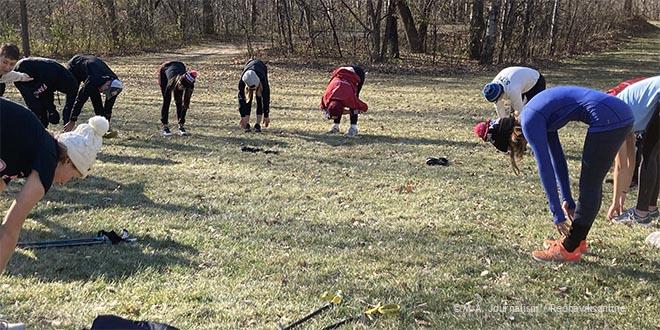

Athletes who skip stretching risk avoidable injuries
Get sport-specific tips from coaches, trainers
Three years ago, three Minnehaha Academy track and field athletes came to practice ready to work hard and left with painful, yet common and preventable injuries.
When they arrived at practice they didn’t properly do the warm up exercises and stretches that they needed to do. When the practice began, their cold muscles simply weren’t prepared for the workout. Two of the athletes pulled hamstring muscles, and the other athlete injured a hip flexor.
“It took them a long time to get back up to strength,” said Dante Britten, the Minnehaha boys’ track and field head coach. “And by the time that happened, we were approaching the end of the season, so they weren’t able to really perform and compete that season.”
During the 2020-21 school year, 77% of Minnehaha Academy students participated in 26 different sports groups, ranging from swimming to basketball to track and field. Whether an athlete is participating in a sport for fun, or headed to the NBA, Minnehaha provides its students with resources that equip them with excellent coaching, sport- specific performance training and injury rehabilitation.
Yet one of the most important ways that MA athletes can contribute to their own success is by learning and implementing proper stretching techniques.
Not only is stretching in sports crucial for avoiding injuries, it also plays an important part in improving athletic performance. However, if done incorrectly, stretching can have a harmful effect.
When athletes don’t prepare their bodies for exercise, injuries can easily occur. Stretching increases flexibility and range of motion in muscles which helps protect the body from injuries.
“You can be too strong and not have flexibility, and it’ll cause injury,” said Kristin Fosness, the Minnehaha Academy athletic trainer. “But you can also have too much flexibility and not enough strength to match that.”
Either type of injury can pre- vent athletes from competing at their best or at all in their sports. Stretching also helps to improve sports performance.
“Every sport is going to move all of the muscles, just in different ways,” Fosness said.
When stretching for sports, remember which muscles you will be working, and what you need each of those muscles to do. Range of motion in muscles is crucial as well. Certain sports, such as gymnastics and swim- ming, require a very high range of motion in your joints.
“There is a kind of delicate balance,” Fosness said, when it comes to stretching and strengthening muscles. Knowing what muscles are going to be used, think about how to stretch and strengthen them.
Despite the many benefits of stretching, many people do not stretch properly, which can lead to injury. Not warming up before stretching, or overstretching can lead to injury.
“I believe if you’re going to stretch, you should warm up, get some blood going, not a very aggressive warmup, but just a two-minute warm up,” said Dr. Stephen Menya, a chiropractor
former world class runner and Redhawk parent. “[But] you can over stretch….Give yourself 15 to 30 minutes of stretching and nothing more, because then it becomes overdone … it has the opposite effect, you are now destroying [the muscle].”
The importance of stretching doesn’t end with preparing for a sports practice; stretching after a workout or practice also boosts muscle recovery.
“You should also stretch after the event [you are competing in] so that you get ready for the next event that is going to come,” Menya said. “Because if you don’t stretch after that event you will be stiff for the next event. Stretch- ing brings nutrients and blood flow to the muscles.”
The nutrients and extra circulation that are brought to the muscles when stretching help heal them and prepare the body for future movement.
An athlete cannot participate in sports at their best without stretching and properly preparing their body for what they want it to do.
Stretching has many benefits for athletes: it helps to prevent injuries, it heals tired muscles, and it teaches an athlete the lifelong benefits of properly caring for their body. Knowing how to stretch is a crucial skill and one that is especially important for athletes.
In the words of Dr. Menya, “Only stretch what you want to keep using.”