
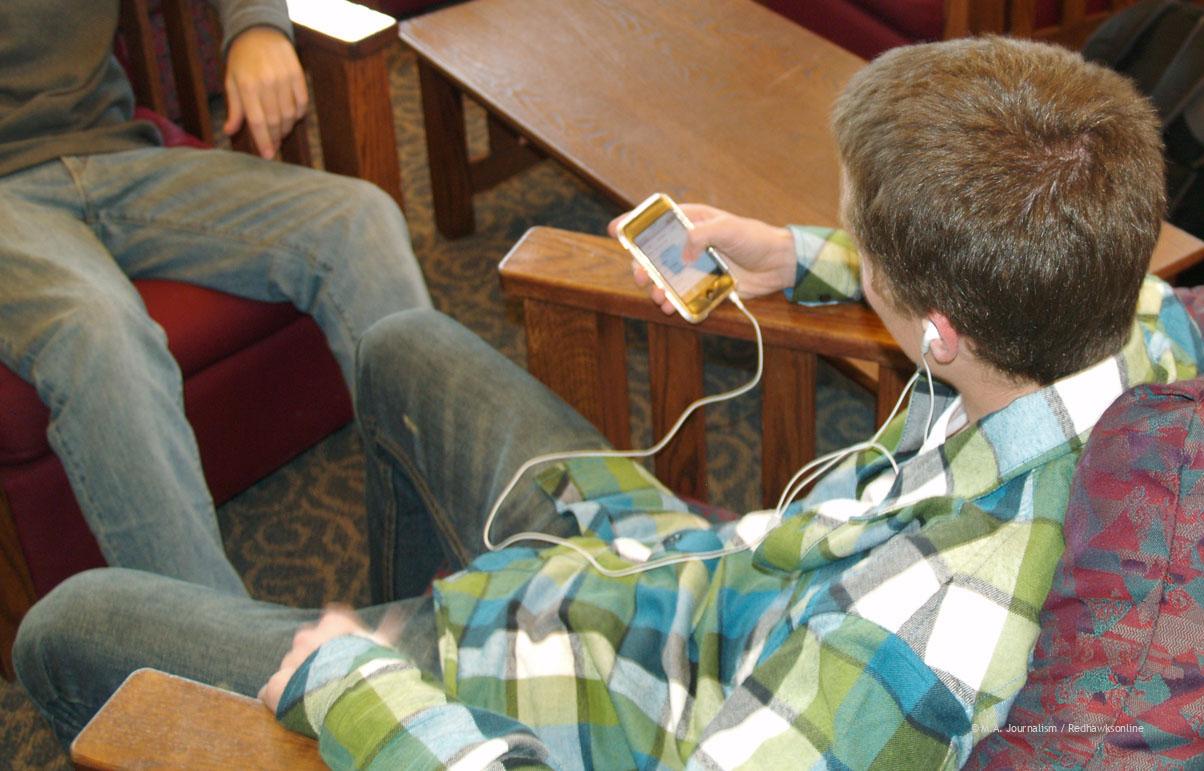

School electronics policy is fair, reasonable
Talon staff
Many students may think that the school’s personal electronic devices policy (referring to use during free hour and flex) is unreasonable or even unfair. In reality, the policy (which was implemented in the 2006-2007 school year) is not only understandable but justified.
The problem isn’t with banning electronics from the classroom, but they think students should be allowed to use electronics during free hour and flex. However, the faculty does not feel the same way.
“Right now this seems to be working pretty well for us,” Minnehaha Upper School Principal Nancy Johnson said. “People comment on the fact that our students talk to each other when they’re not in class, rather than sitting there with their ears plugged in, which was often the case [before the rule].”
The personal electronic devices policy creates what it calls “a social environment that promotes more, rather than less, interpersonal communication from student to student and student to teacher.”
It says that the absence of electronics allows (or maybe forces) students to interact with one another, which improves the all around atmosphere of the school.
There was also the issue of accidentally interrupting class.
“When it began one of the issues was people calling each other from other parts of the building all the time,” Johnson said. “And that was during free periods, forgetting who had class and who didn’t, and interrupting class.”
Without cell phones and iPods the school has developed “a learning environment that enables a deeper level of thinking/reasoning, a higher level of quality in the completion of academic work, and fewer distractions and interruptions during the school day.”
Also, it’s not as if the staff decided to make the rule on a whim.
“The teachers were not opposed to it at all, because they wanted a better learning environment,” Johnson said. “There were a lot of reasons [for the rule]. We did research at the time to decide whether or not that would be effective.”
Making the rule also took away something that could be used for academic dishonesty. Not to say that phones were being used that way often, but they facilitated such intentions.
Some might also say that the $20 fines should be eliminated or reduced. However, a lessening of the fines takes away some of the incentive to not use electronics. Is it that big a deal to lose five dollars because of getting caught using your phone?
Also, according to the policy “The fines collected will be used to help fund the student mission project.” Taking that away would be $1000-1500 less to Haiti this year, estimated Johnson.
So next time you get caught using your cell phone, don’t be upset, it’s justified; and keep in mind, you’re helping someone in need.