
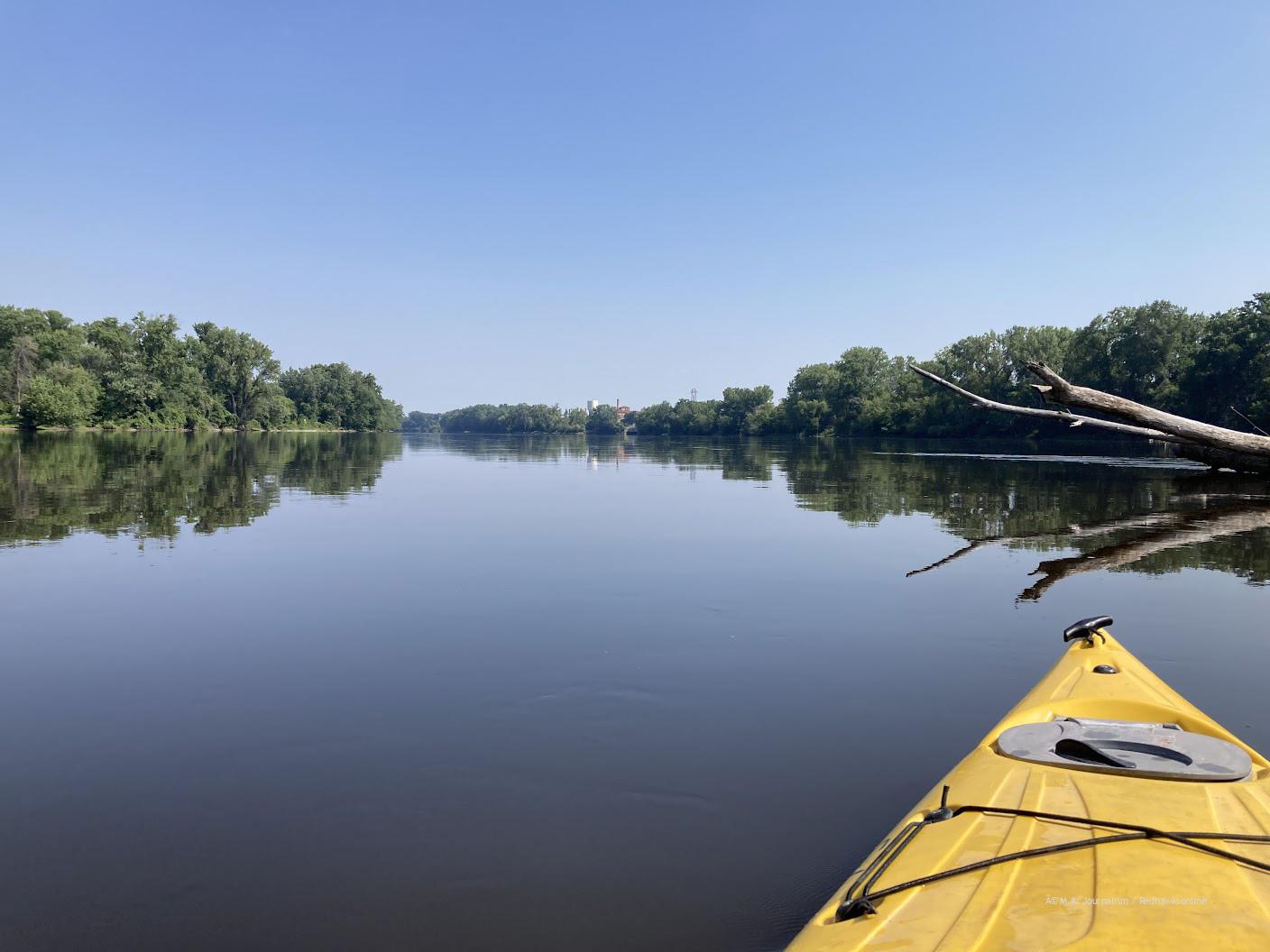

Salt, fertilizer, chemicals pollute the river. What is Minneapolis doing about it?
It’s no secret that Minnehaha is right next to the Mississippi. Yet awareness around the river itself is much more limited.
In fact, M.A. students may not know the damage done to the river daily. Water from all over the city, whether from sewers, drainage from the ground above, or pre-filtered waste, is sent to the river daily. “Chemicals can directly affect the wildlife, and fertilizer, or even pet waste, can lead to a great increase in aquatic plant growth,” said Carmella Whaley, biology and environmental science teacher at Minnehaha. “So an overgrowth of algae or aquatic plants can, as living organisms, use up oxygen and give off carbon dioxide.”
This algae overgrowth removes all the oxygen, which causes the water to become stagnant. “A process called eutrophication can occur, where there isn’t enough oxygen to supply the animal species in that aquatic area,” Whaley said. “You might lose the zooplankton, and then small fish, and the larger fish, and then anyone who ate that fish.” This eutrophication, caused from the fertilizer runoff, creates an unprecedented amount of damage. The algae spreads, encouraged by the continued expulsion of fertilizer, creating larger and larger oxygen-stagnant areas of the Mississippi. “That has led, on a large scale, at the southern end of the Mississippi River in the Gulf of Mexico, to the dead zone that’s the result of the overgrowth of algae,” Whaley said. The accumulating runoff from the pesticides, chemicals, fertilizers from agriculture, along with gasoline and other waste, travels further and further down the river, eventually culminating in large patches of algal blooms, creating dead zones which limit, if not eliminate, aquatic life entirely due to eutrophication.
And it’s not just fertilizer. “One of the biggest problems we are facing right now is salt,” said Mary Yang, community outreach specialist at the Mississippi Watershed Management Organization (MWMO) in Minneapolis. “Salt is a major thing in Minnesota, where we’re living with snow over the four winter months, and people are misunderstanding how much they need.” Yes, salt is used for sidewalks during the winter months, but if it’s too cold, the salt won’t ‘melt’ and absorb into the ice, and instead just sits in excesses, unswept. “And that is a big problem, because that’s going straight to our river, and nothing is filtering storm water runoff,” Yang said. “It’s hurting the fish. They’re all known to freshwater.” The massive amount of salt pollutes the water and makes it too salty for the native freshwater fish in the Mississippi. “One teaspoon of salt pollutes about five gallons of water,” Yang said. “Imagine how much we use every year that goes straight to the river. Our water could become extremely salty in the near future, to the point where we won’t be able to drink that water anymore.”
Not only are algal blooms hurting aquatic life during the summer, the winter months do their own damage, along with chemicals year round from above ground. “We drink that water, and all organisms that use water as their habitat are affected,” Whaley said. “And you see urban sprawl, growth and development paving over natural land, which causes surface water, which carries oil and gas, to drain into the river.” But despite the heavy subject, not all hope is lost.
Various groups from around the country, like the MWMO, work tirelessly to care for the Mississippi, using the term ‘watershed’ to describe their work. “A watershed is anything that drains to one body of water,” Yang said. “Our watershed is the Mississippi River, because everything that falls into the ground here will go into the river.” And groups around the city have been working to care for the river and its surrounding watershed for years. “Friends of the Mississippi River is a local organization that does a lot of outreach education about the river,” Whaley said. “They’ll hold events like ‘make your own rain barrel,’ or ‘help volunteer at this prairie planting,’ or ‘help us pull invasive species from the river.’” These groups contribute through advocacy, legislation, and education outreach, or in MWMO’s case, often helping fund green infrastructure projects. “Green infrastructure can include bioswales, rain gardens, tree trenches, cisterns,” Yang said. “We reuse water, recycle water, anything that can really slow down the process of water moving to the river. So that’s how we want to make sure that we’re protecting water; by making sure that we’re funding projects, making sure that we’re educating the young, the community, about how we can protect water.”
But activism surrounding the Mississippi watershed doesn’t have to just be a non-profit, or the government, or a professional group. Minnehaha students can participate, too, whether that’s applying to be a Creation Care Intern as a junior or senior, adopting a drain around the neighborhood, joining a cleanup initiative, helping fund rain gardens, or even sweeping up the excess salt on the sidewalks. “Anything that you pour onto the ground will end up in the river,” Whaley said. “And think about that, what you’re allowing to be on the ground coming through your faucet, in your sink, in your kitchen. Do you want that? Do you want that gasoline, that oil, that pesticide, that fertilizer in the yard, that pet waste in your kitchen sink? Probably not.”