

Defining the Undefinable
AP studio art is a class designed to make students thrive in art and design. It is a College Board advanced placement (AP) art class that is centered around creating with different materials, processes, and ideas. Additionally, this is an AP Art course that is crafted to develop the skills that artists and designers use and create a portfolio that will ultimately be submitted at the end of the year for an AP score, rather than a final test. The final portfolio consists of 20 pieces of art per student and can be used as a working portfolio for college and job applications.
Art teacher Nathan Stromberg said his favorite part of this course is enjoying being “a fly on the wall”, and being able to observe students and see them develop in artistry.
“A huge part of doing any artistic work is just pushing yourself,” he said. “You’ve got to do it. So at some point, the teacher can’t hold your hand and force you to do it…. It’s really fun to kind of see how the work develops, and just how they motivate and push themselves and what they learned about their own ability to make art because that’s kind of what it’s really more about, the process rather than the final product in that respect.”
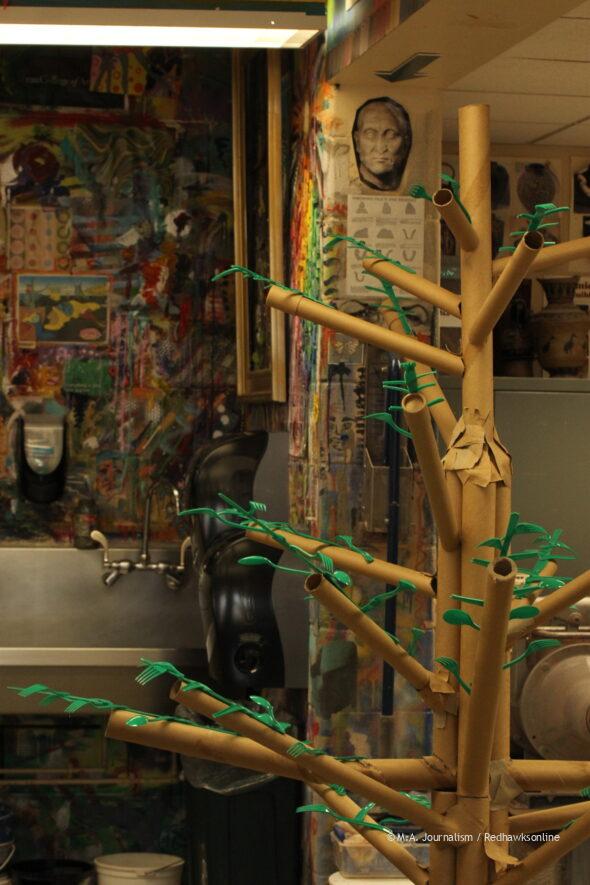
Senior Zeke Elwood’s project revolved around the idea of making natural shapes and forms out of artificial materials. Elwood used materials that are recycled or can be recycled including plastic bottles to make flowers, as well as cardboard tubes and plastic cutlery to construct a tree.
The project is made up of two main ideas. The first is the aspect of whimsicalness and fun that comes through in the artist’s style. The second is the inspiration for the project.
“What would the planet look like if there wasn’t nature and all that there was artificial? What would that look like? If we tried to produce things that seemed natural out of nothing? Is that nature itself?” said Elwood.
The largest piece in Elwood’s final portfolio represents the juxtaposition between natural and artificial.
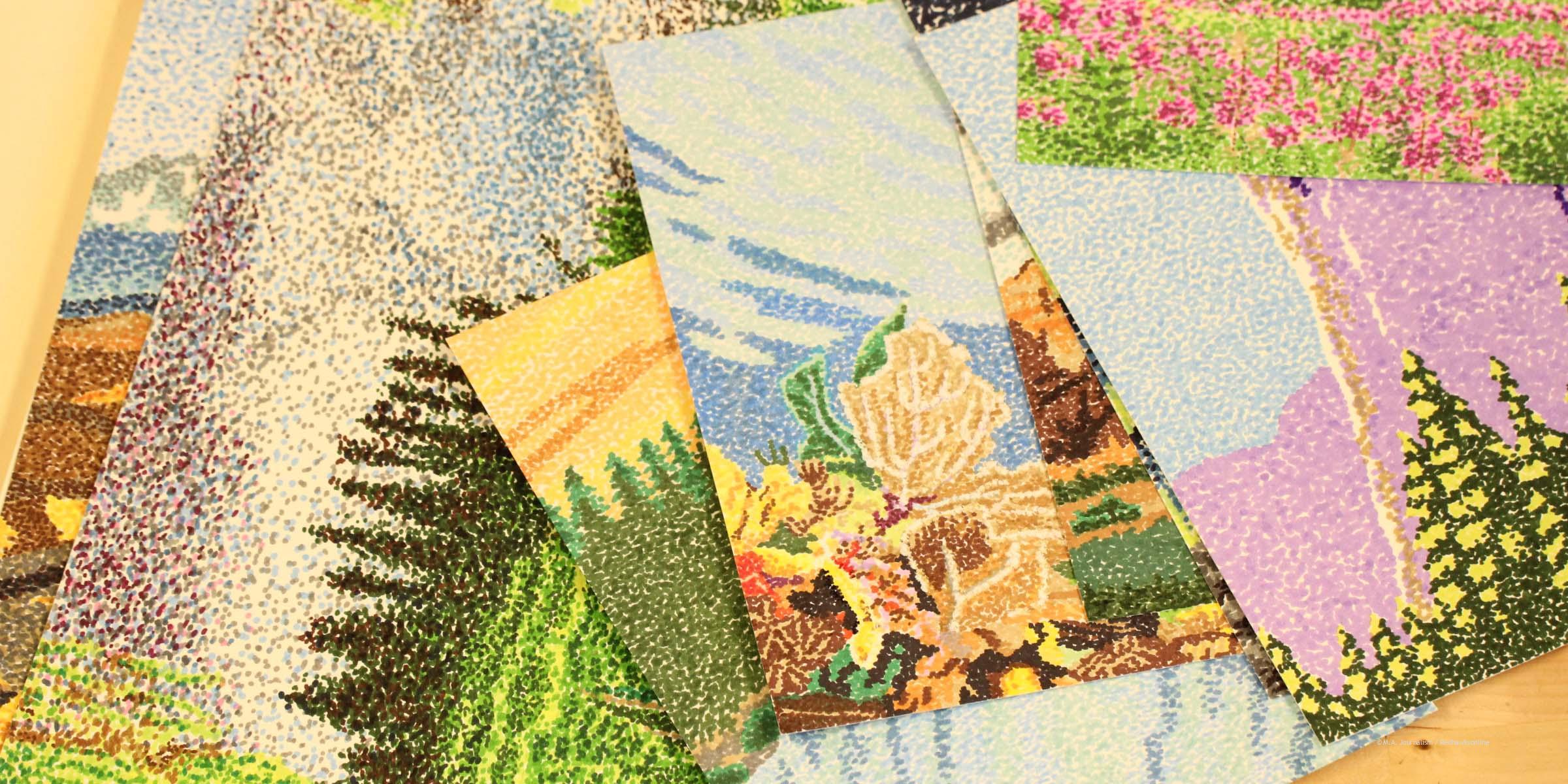
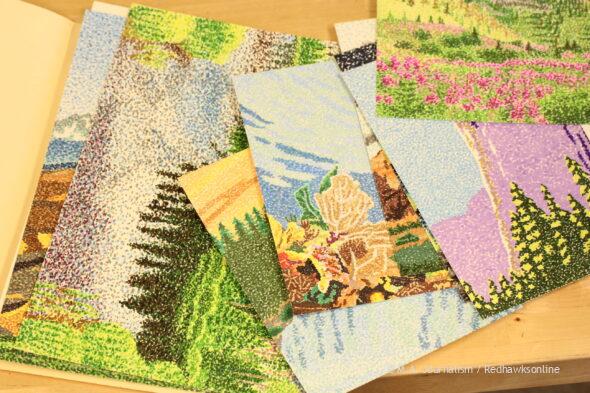
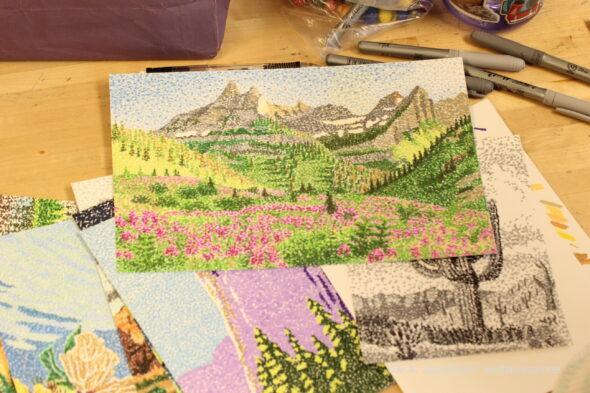
The natural subject was also represented in fellow Senior Molly DiNardo’s portfolio theme: national park landscapes in pointillism. Pointillism is a drawing and painting style using various small dots. Her project includes both colorful, black and white, and pencil drawings in pointillism. DiNardo’s inspiration for this project comes from national parks because of the importance of conservancy and her love of the concept of places that are protected from the detriment of the world around them. Additionally, DiNardo said,
“protecting but then showcasing the beauty” of conservation sparked the idea of national parks in her work.
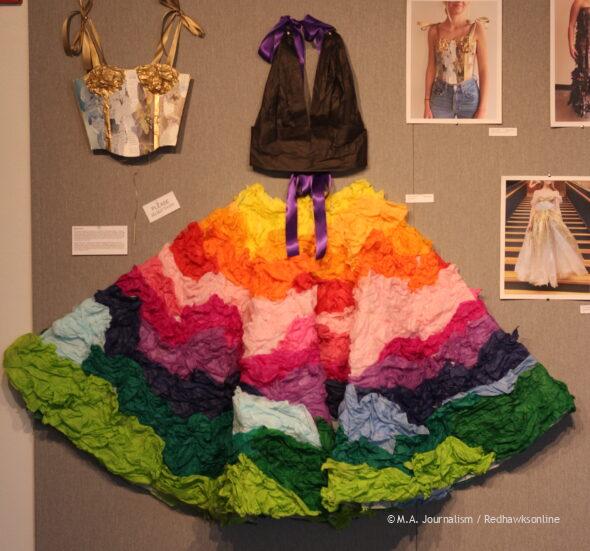
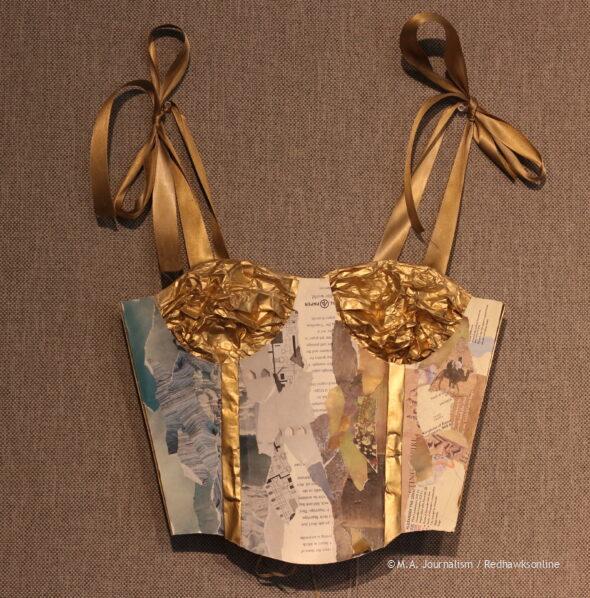
Additionally, senior Maria Lemmons decided to implement a different element to her portfolio, fashion. Her project consistsof mediums such as Post-it notes, trash bags, magazine pages, and other types of paper. Her goal for the project was “to create formal wear out of non-fabric materials”, said Lemmons. Consequently, each piece has spray paint elements incorporated. This is a continuation of her project from last year which originally sparked the idea.
“I think I was just wanting to play with more materials and it was so cheap and fun to just show that you don’t need expensive fabrics to make cool-looking clothing,” Lemmons said.
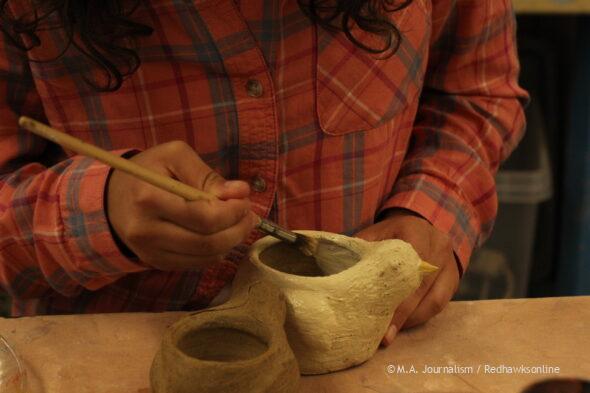
Senior Greta Kloos focused on pottery for her portfolio. Kloos created several sculptures and pots revolving around the central idea of birds. Kloos said,
“My sustained investigation is making bird pots, sculptures, dishes, or bowls and the birds that I chose kind of represent different aspects of me”.
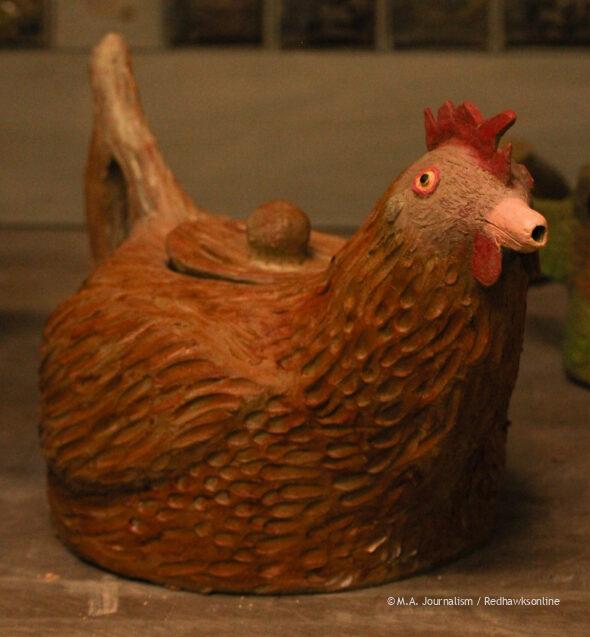 For example, her loon piece represents that she is from Minnesota, the toucan shows she is Colombian, the chicken is just because she has chickens, the hummingbird is her self-proclaimed spirit animal, and the owl is because of her love of reading. Also, each pottery piece has a different purpose including a teapot, cookie jar, pencil cup, mug, and kitchen spoon holder.
Each student’s project is extremely creative and unique to them and the process of the AP Studio Art class makes each student grow and shine as an artist – while continuing to challenge and expand in the limitless possibilities and world of making art.
