
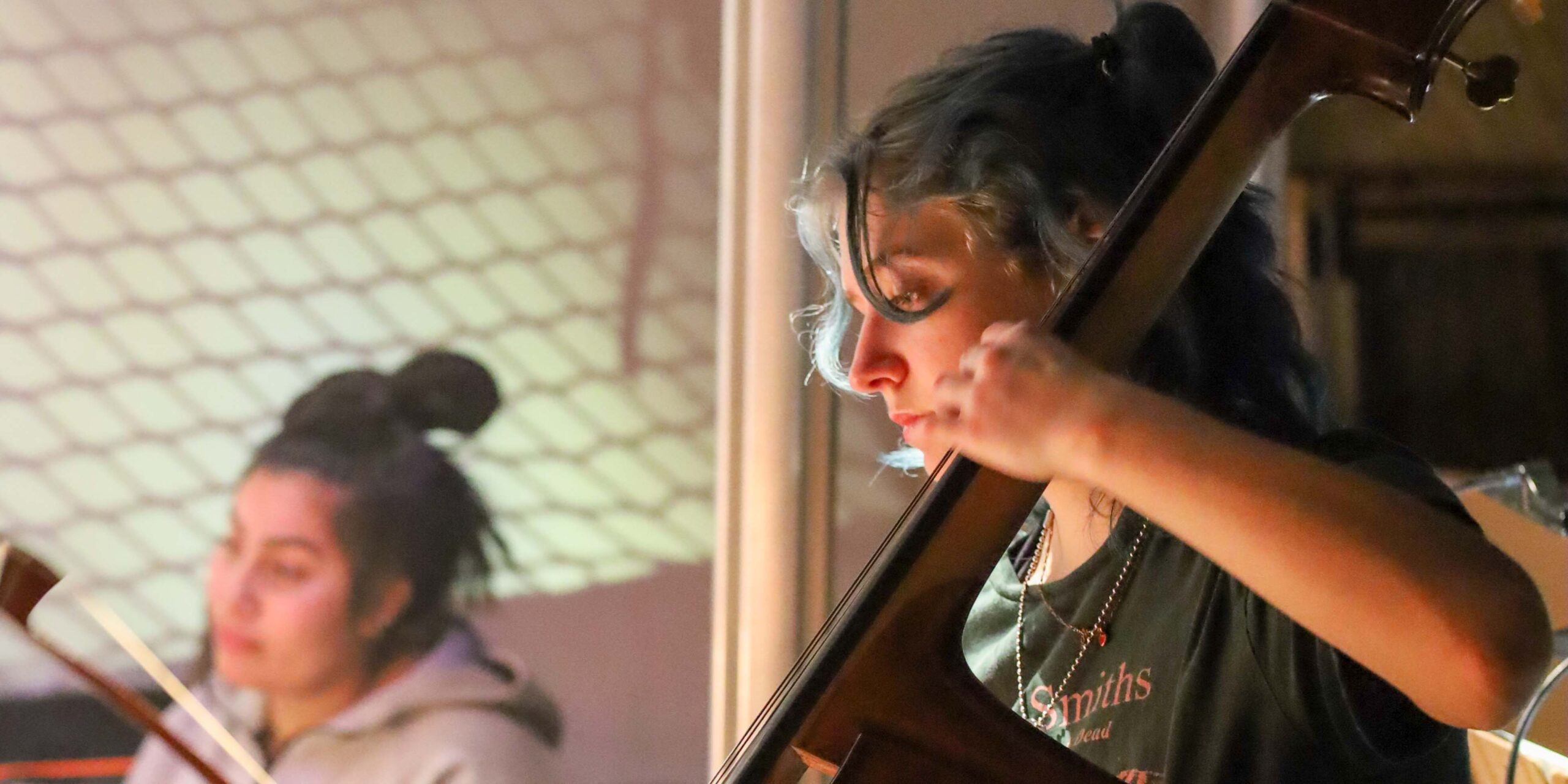

The unique experience of pit musicians
The alarm went off, scream ing its high-pitched blares. Elaine got dressed and walked out of her apartment, feeling the morning breeze. She took the empty subway to the studio, and set up her trumpet. At 4:30 in the morning, she prepared to play for the revival of “Hair” in the pit orchestra. Families from all over New York would watch the show but never see Elaine.
“We felt like stars for a minute,” said Elaine Burt, a freelance trumpet and pit orchestra player who played all over Broadway and now plays here in Minnesota. She also works with Minnehaha Musicians during the Tuesday morning late-starts.
The pit orchestra refers to the musicians and conductor below the stage. Unseen, they accompany the actors and singers on stage and are essential to creating the overall experience of a musical performance, especially for musi- cal theater, opera and ballet. Each member of the orchestra is equally important and are all performing at their highest level.
“It’s always a thrill to work with people that are the best of the best,” said Burt. “I’ve never worked with anybody that was a drag at all. [People] have always been super supportive and amazing. You know, we’re just going to use a phrase, we’re all in it together.”
The pit orchestra isn’t a one- time gig, musicians work with multiple pieces of music for a prolong period of time As a result the musicians have many opportunities to connect with one another on a more personal level.
“To be in a pit and surrounded by wonderful musicians. Hopefully everybody’s there because they really want to be there,” said Burt. “One of the things I love about pit work is that the shows go for a while. Some of the ones in New York go for decades. And you know, over that run, you really create a family. There’s toxic pits, but for the most part a real family kind of vibe starts to take place, because we go to that place every night and we want to play together.”
Apart from performing at a high level, pit musicians must be prepared to think on their feet as errors can happen on stage. If a measure is skipped or an actor is hesitant to say a line the pit orchestra must be prepared to save the situation even while they’re below the stage.
“We have to kind of play off and be able to really adapt,” said senior Simon Poelman, who played the baritone sax in this fall’s musical, Into the Woods, and the cello last spring in Amelie. “You’re sitting in a chair with your instrument, pretty cramped.. and you have to be laser focused on the conductor because we can’t see what’s going on other than a little [monitor]..It’s so much about focus and being able to play for that long.”
A level of trust is built in the pit. As musicians get to understand their music, they rely on their fellow musicians and the conductor for cues and the overall performance of the orchestra.
“You have to be able to completely trust each other,” said Poelman. “Because it’s so much about playing off other people, whether it be cues for when you come in.. every time I’m listening, and I need to know that you’re going to come in at the right time. And you’re going to come in and play that with enough confidence that I know you’re coming in at the right time.”
For Alicia Sylvester, a senior who played the synthesizer in Into the Woods and piano in Amelie, she felt that there was a level of trust even outside of the pit.
“The community of the theater department is so loving, said Sylvester. “Last year, I just randomly joined and I barely talked to most of them and they all welcomed me. I still have so many friendships that I like to talk to on a daily basis just from theater alone.”
The trusting environment in the pit at Minnehaha made musicians feel comfortable and encouraged them to not be hung up on mistakes made in the music. This allowed a family bond to form making events like spirit days and cookie parties possible.
“It’s just so rewarding to hear us all come together, because it’s my last year,” said Sylvester. “I’m probably never going to be able to do this again, especially with this group of people. It’s like, I love you guys.”