
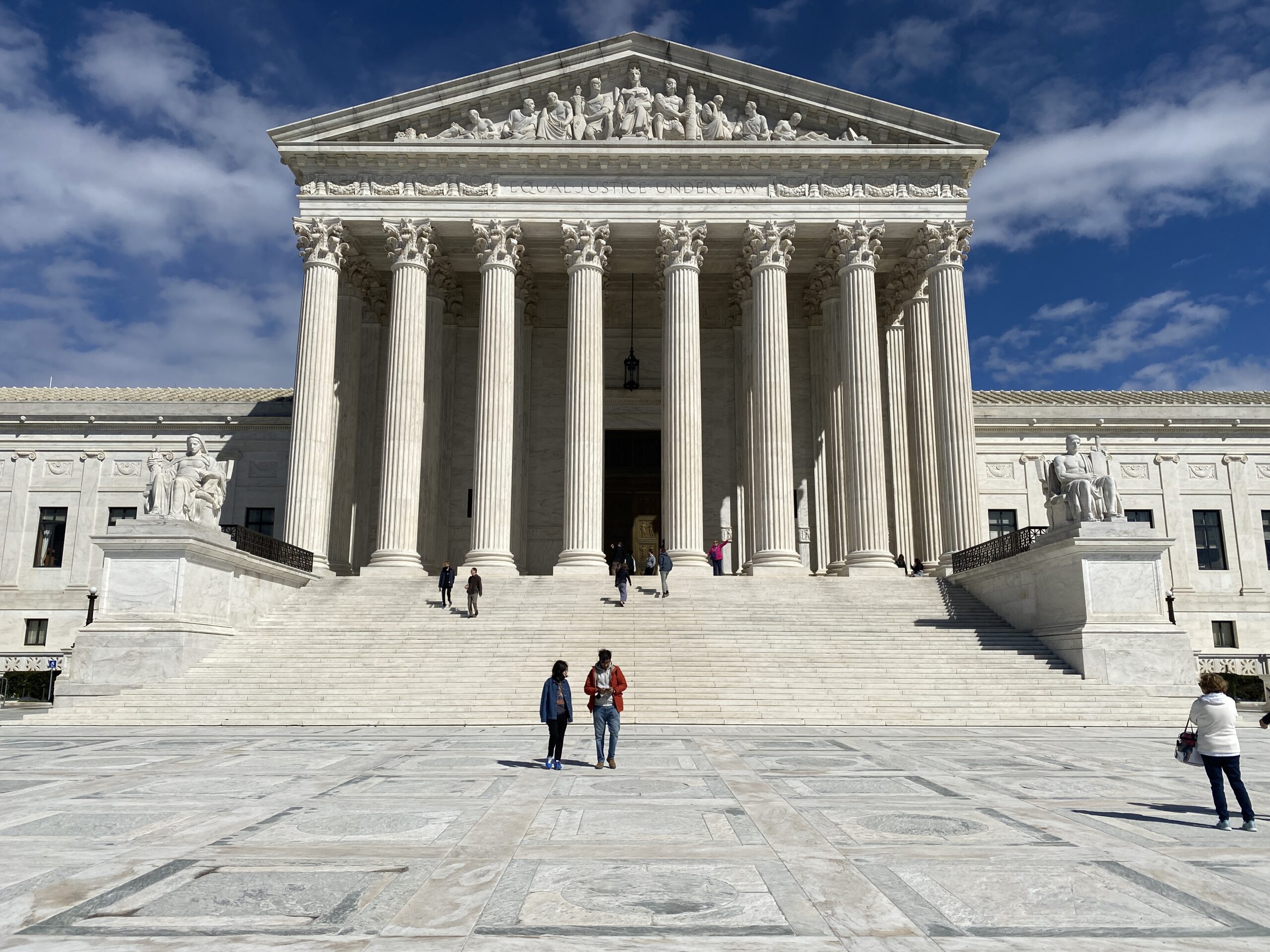

Now almost a half-century old, Roe v Wade (1973) is a Supreme Court case famous too many and infamous to most of the rest. In 1970, Jane Roe (a fictional name to protect the identity of the individual) sued the district attorney of her residential state of Texas and challenged a law that made abortion illegal except in life threatening situations.
Roe claimed that the Texas violated her right to privacy guaranteed by the first, fourth, fifth, ninth, and 14th amendments.
The Supreme Court ruled both that privacy was protected by the due process clause of the 14th amendment and that what happens between a woman and her doctor is protected by that right.
However, they also weighed the right to privacy against the government’s responsibility to protect the “potentiality of life”.
They decided that in the first trimester of pregnancy the state may not restrict abortion. However, once into the second trimester, about 14 weeks of pregnancy, the state could place restrictions on abortion related to maternal health and once past viability, the point at which the fetus could survive outside of the womb, which occurs about 24 weeks into pregnancy, the state may regulate or prohibit abortions not needed to save the women’s life.
The American Bar Association considers the case one of the 11 most landmark cases in the history of the Supreme Court, not only ruling on one of the most controversial topics in US history but also establishing a right of privacy in the constitution. Now, it is possibly being overturned.
The current case the supreme court is considering, Dobbs v Jackson Women’s Health Organization, is a lawsuit challenging a Mississippi law that bans abortion after 15 weeks of pregnancy. Dobbs argues that new technology suggests that life begins much sooner in the womb than what scientists thought when Roe was decided.
The current Supreme Court is weighted 6-3 towards conservatism, and seems poised to overturn Roe v Wade. A leaked draft of a supposed majority opinion by the court completely overturning Roe from Politico seems to support that claim. Chief Justice John Roberts said the leak was an authentic draft but added that it was not final.
In the draft decision, Justice Samuel Alito wrote that the reasoning of Roe v Wade is exceptionally weak, and that abortion is not a right guaranteed by the constitution.
If the Supreme Court reverses Roe, it would allow states to establish abortion bans, and 13 states already have laws that are worded to ban abortion in the first and second trimesters. Another 12 states are likely to make new laws banning abortion.
The reality of having to go to another state to get an abortion – such as Minnesota, where abortion would remain legal – is one already present for many women. Even under Roe, 90% of U.S. counties already do not have abortion clinics. The state the current case is about, Mississippi, has only one.
Some legal experts predict that the use of abortion pills may become the next focus for legal battles.
Some critics of the leaked decision argue that banning legal abortions may simply lead to unsafe, illegal ones occurring in living rooms as opposed to clinics. Other critics worry that overturning Roe v Wade may have other effects, such as weakening a citizen’s right to privacy. Overturning Roe on the basis that the case took to many liberties with what the constitution guarantees threatens not only abortions, but also the line of reasoning that the constitution protects privacy.
Other Supreme Court cases, such as 1967’s Loving v. Virginia, which struck down state bans on interracial marriage, are also built on the implied right to privacy.
Whatever happens, It is up to the decision of the highest court in the land.