
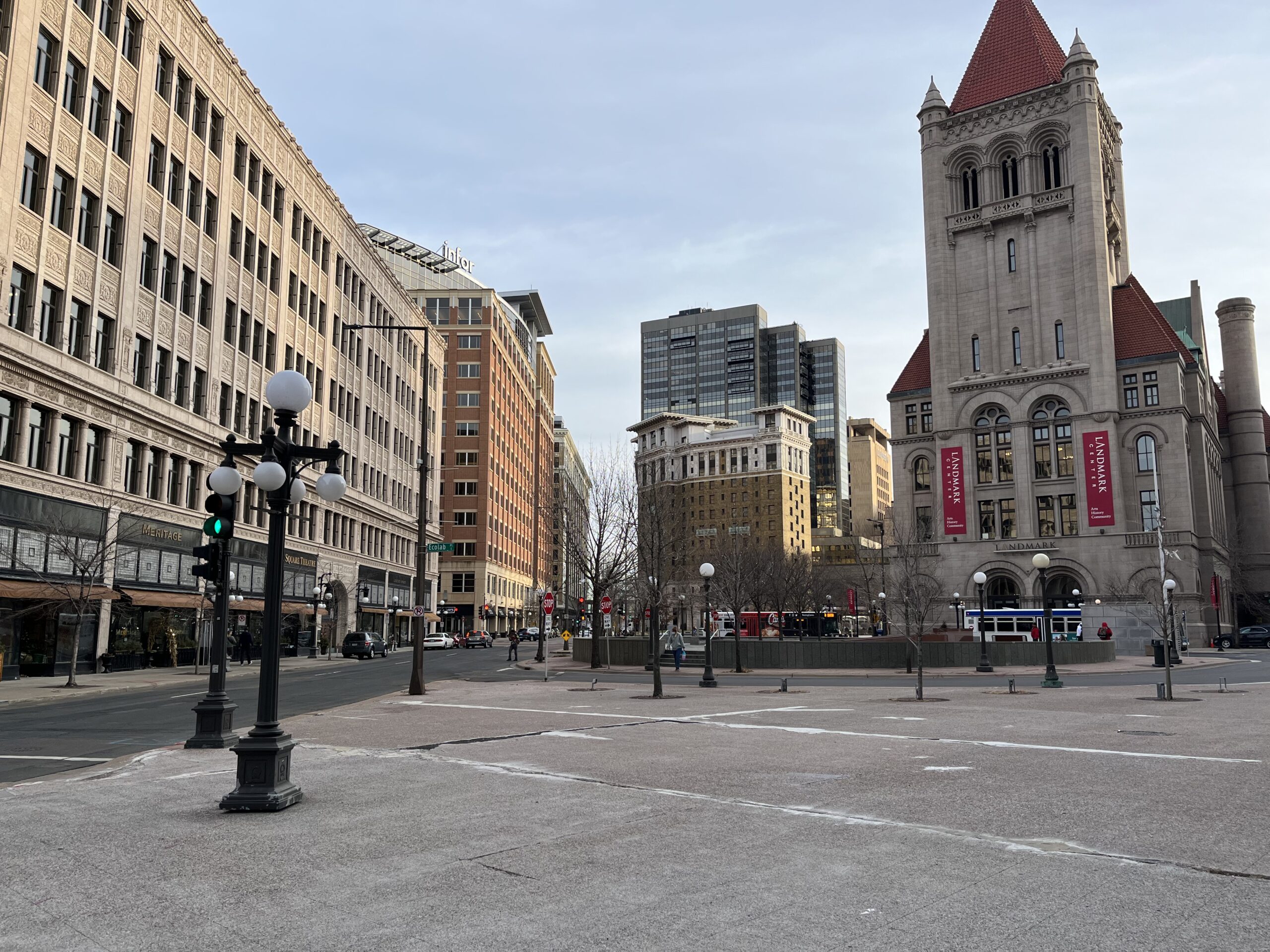

For students, downtowns have little appeal
From afar, the skylines of downtown St. Paul and Minneapolis are some of the most iconic parts of the Minnesota landscape. However, if you’re a student, being downtown might be much less memorable.
Despite both downtowns having sports stadiums, music venues, and critically acclaimed restaurants, students rarely talk about them as desirable destinations. While both downtowns look good on paper postcards, the atmosphere in person brings most students to compare them to ghost towns.
The feeling that downtown is somewhat soulless is shared among many students who want more personality in their city.
“I don’t see anything that strikes me as fun to do. It seems like a lot of office buildings,” said senior Josh St. Andrew.
The corporate atmosphere also acts as a deterrent for students who would otherwise spend time exploring local offerings. A denser and more walkable retail style, similar to Chicago’s Michigan Avenue, could relieve some of the corporate vibe and bring more students in.
“Minneapolis doesn’t have an Avenue like other cities where there’s like long streets of stores,” said junior Anna Udris. “Everything is in different areas, which is annoying.”
How students get downtown also needs addressing. The lack of parking makes being downtown “inherently a pain,” as described by senior Tollef Currell. And even more than the inconvenience of parking, the safety of public transportation is often questioned. An investigative report by KSTP 5 Eyewitness News in June found that crime, drug use and drinking happened frequently on METRO light-rail trains and stations.
When arriving downtown, many students say that a feeling of insecurity continues.
“There’s people hanging around, yelling at each other,” Currell said. “Unfortunately, homeless people gather in areas, which you can’t criticize them for, but it makes it feel unsafe.”
Minneapolis 2040, a decennial report by the Minneapolis city council on future plans and goals for the city, goes over steps for improving downtown. Policy 59 of the report, which focuses on downtown, includes supporting local institutions, adding physical pathways to connect entertainment hotspots and further plans for public safety.
However, with companies now leasing less office space due to remote work, Policy 59 stated that a high priority is “[promoting] the growth and retention of businesses and office space Downtown.”
Fortunately, downtown Minneapolis and St. Paul have some features that students really appreciate. For example, the parks system in Minneapolis creates a valuable escape from the hussle and bussle.
“Gold Medal Park and Rice Park, they’re always so busy, and I think that’s a really good place to go,” said St. Andrew. “Especially in the middle of all these buildings that really shadow over you.”
St. Paul’s historic architecture and mobster past gives it a uniquely old school atmosphere which values being in the know.
“If you’re trying to look for that small locally owned business, I would go to St. Paul, especially around Grand [and the] Capital area,” said junior Avary Lessard.
Downtown St. Paul and Minneapolis have potential to be hubs for students looking for entertainment. For now though, entertainment offerings remain a backseat priority.