

News media consumers are slowly moving from print to mobile because of accessibility, study shows
How do we get our news? The answer for many Americans (especially for men, Republicans and those of 50 years of age or older), is changing.
These Americans are leaving the news sources they have previously relied on, according to a study by the Pew Research Center. 60.7 percent of those surveyed cited a drop in completeness of stories, while 23.5 percent cited a decline in the number of stories available via traditional sources. Both are reasons why Americans are switching to mobile-based news.
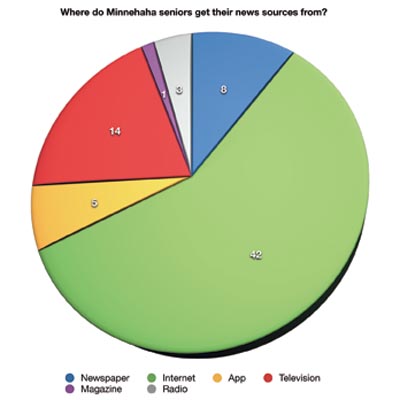
Results from a poll taken in early May by The Talon staff. Graphic by Elliot Dorow Hovland.
A majority still want a print-like experience, according to the study, but are turning to mobile news because of the wider variety of available coverage. These consumers are also leaving more traditional print-based and network television news outlets and moving to mobile-based news feeds for other reasons: quicker and cheaper access to news and a much wider variety of coverage all in one place — a mobile device or computer.
However, the wide variety and easy access to news lets consumers pick and choose sources which might only tell them what they want to hear.
“The fact that we are increasingly interconnecting with each other and getting news from all sorts of angles could potentially be a healthy thing,” said social studies and debate teacher Nathan Johnson. “The downside is that what we are tending to do is get more and more of our news from angles that only appeal to us.”
“So, previously, a conservative would have to watch network news and read the local newspaper, perhaps hearing opinions that were more moderate,” he continued. “The same thing goes for the liberal, who would have to watch mainstream news or [read] the newspaper that might be more conservative than he was used to. And now you can get all of your news from a place that confirms your opinion and reinforces your opinion and might even push you more in that direction.”
“So while we could be getting more opinions from the variety of opinions out there,” said Johnson, “that’s not necessarily what’s happening. And so one of the problems is that I think we are, ironically, maybe less likely to deeply read and consider things coming from an opposing viewpoint.”