

“The book was better.”
One may hear this phrase uttered whilst exiting a film adaptation of a particular piece of literature. Hollywood loves adapting pieces of literature to the big screen, but does “the book was better” over-simplify objections people may have when the book in question is the Bible?
Two films released in early 2014, Noah and Son of God, drew much attention due to their biblical connections. What separates these films from other movies is the importance of the director’s intention when dealing with religious source material.
“[Anachronisms don’t] offend me because I know how to ask the question, ‘what’s the intent here?'” said sacred studies teacher Rev. Dan Bergstrom. “It’s at the artist’s discretion what they want to do with it. When they do that with the Bible, it may offend some but again the importance is always asking the intent.”
Son of God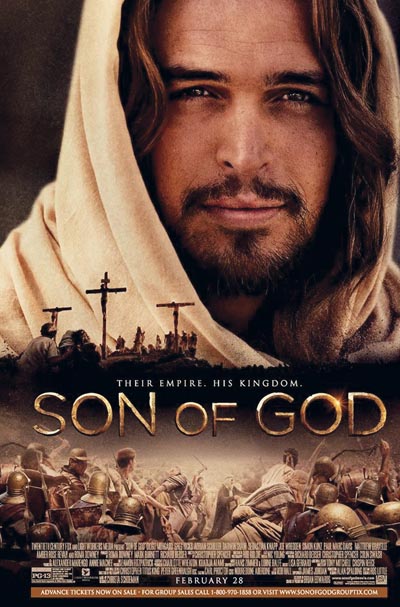
Roma Downey, co-producer of Son of God, agrees that intent is something to consider deeply not only when watching a film, but when making it also.
“I think everything begins with intention,” Downey told Belief.net regarding Son of God. “We prayed on this from the beginning, from its beginning as a whisper in our hearts, we prayed on it and we continued to pray and asked others to pray for us and with us. And I think that has been part of the spiritual engine, certainly behind the project from the beginning.”
Junior Nick Terlizzi could feel that spirit moving through the film. He also felt that the premise from which a film was made, made all the difference.
“As a Christian, I don’t want people using biblical stories to get money or fame,” he said. “Or doing it for the wrong reasons. I think [with] the Son of God movie, they were doing it for the right reasons. And that made it better for me to watch and enjoy.”
Noah
Sometimes, however, a film is produced with the intent of solely entertaining the general populace. Economics and Philosophy teacher David Hoffner, who viewed Noah in theaters, understood that the film he was watching was made to entertain and not to deliver a religious message.
“I really liked his vision and the creativity with which he told the story,” said Hoffner. 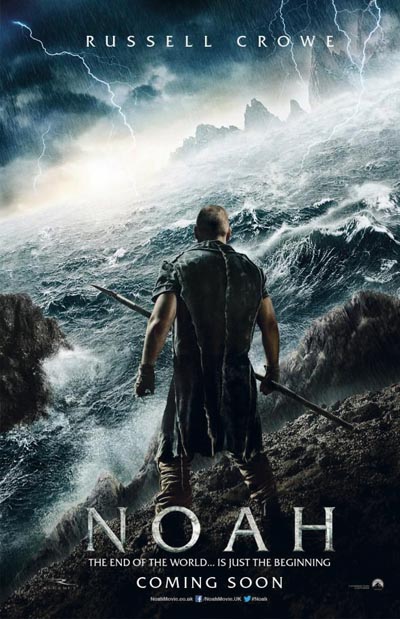 “So I know a lot of Jews and Christians who revere the story were angry about various aspects maybe being unbiblical. But I don’t think that’s the point. I think the point was that he was telling it in a really beautiful and creative way and he added a lot of theatrically rich elements so there’s clearly a lot of imagination at work.”
In an interview with The Washington Post, Noah director Darren Aronofsky claims he did not misrepresent the story of Noah told in Genesis, he only added a richer dimension to the story.
“Of course there’s [artistic] liberties, I mean, we’re making a movie here,” he said in his interview. “If you read the story of Noah, it’s very straightforward. The character of Noah just builds the ark and collects the animals. But the struggles, the effort of building an ark, of being responsible for all those animals, of being responsible for a family, it’s not explored at all. So how exciting to actually say, ‘Oh wow, here’s this great story, how do we put human emotion into it?'”
Due to these artistic liberties, much controversy has sprung up over this religious film in particular.
Discussion has always been stirred up when religion comes to the forefront of people’s minds or laid in front of them on the silver screen. Rev. Bergstrom encourages such discussion but with caution.
“If the conversations lead to an honest give and take and an honest search for more information and more truth about faith issues, great!” he said. “But if it polarizes people based on ‘the movie did this or didn’t do this,’ you know, that could be counterproductive. The point is where do those conversations point us? Do they point us into further curiosity about faith about what the Bible is trying to say about what is God calling [us] to believe as individuals? Then [it’s] wonderful that those conversations are taking place.”
When someone watches a movie, he or she is watching the filmmaker’s vision. It is a story that they have interpreted and filtered through their own beliefs and perspective. Hoffner sees the importance in watching with that thought in mind.
“I think it’s a testimony,” said Hoffner of Noah. “That can never be avoided because if you get rid of the author, you don’t have the text or the reader. They all play a part: the author, the text and the reader, and it’s not just readers alone. But one of the beauties of enduring art is that there are many interpretations of it that the author has given license to by making it available. Because if it were only for [the filmmakers] and [their] vision, [they] wouldn’t put it in theaters. [They] want people to see and talk about [it] and I think other people having different views about [the film] are totally welcome and encouraged; that’s what makes it beautiful.”
So whether it’s better or worse than the book, or whether the book is a true story or not, the key is to look beyond one’s own prejudice when sitting down in that theater seat with a bag of popcorn. Try to see the intention behind the film and the artistic vision that was brought to make it an enjoyable experience.