

Tuning into any news broadcast, you will quickly be made aware that these are unprecedented times. Social unrest, geopolitical time bombs, and a worldwide pandemic make everyday feel just a little bit off.
If you are looking for music to fit these uneasy times, music that uses microtones might be just what you’re looking for. In essence, microtones are notes that go between the notes we learn in our standard music education.
“The Western 12 tone equal tempered system divides the octave into 12 equal divisions”, said University of Pittsburgh Professor Mathew Rosenblum.
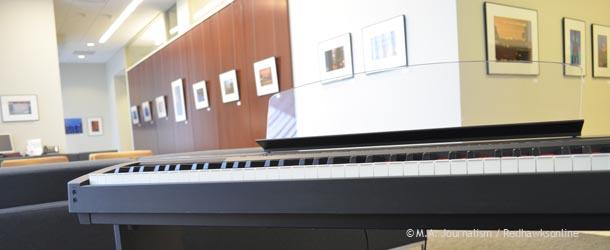
A piano is an example of this because the keys are separated into octaves with 12 keys right next to each other making up that octave. Microtones then fit in between the keys you can play on a piano.
Another way of looking at microtones is by using math. An octave is divided into 12 notes and each note is measured in cents.
For 12 notes in an octave, each note measures 100 cents making 1200 cents total. However nothing says that a note needs to be 100 cents.
“Some composers divide the octave equally by 24 notes (50 cent steps), 19 notes to the Octave (63 cent steps), 31 etc.” said Rosenblum.
The sky’s the limit in how you want to divide your notes
Around the world, many cultures have microtones naturally in their music.
“Persian music [uses] the maqam modal system which incorporates quarter tones, Indian music [uses the] 22 note scrutiny system” said Rosenblum.
If you listen to music from other cultures that use different tonal systems, it may sound out of tune or out of tune, however that doesn’t mean that it’s wrong. Knowing these differences in how music is written around the world can not only provide a much more global perspective on music but can increase an appreciation of cultures beyond one’s own.
“[It] could be really beneficial in just thinking of other people and how their experiences aren’t the same as own” said band director Ryan Larson “[other cultures] have different songs and they may sound a little bit strange to our ears, but for them it’s very natural”
Today Composers are still finding new ways to divide up notes. Systems such as Just Intonation that change the cent spacing of pairs of notes are increasingly popular. It all serves to generate for listeners
“A different flavor and Emotional response,” said Rosenblum.
With all the chaos that is going on in the world, listening to some microtonal music may tickle your emotions in just the right way.