
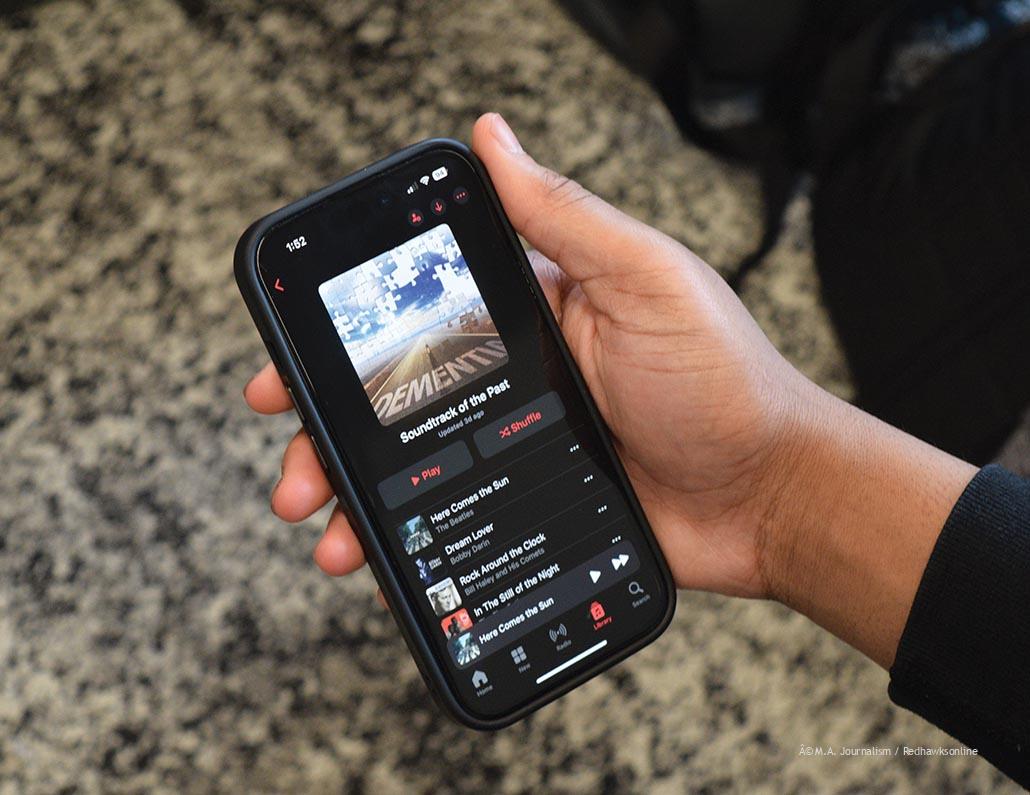

How music transforms mental health and dementia
Music has been considered a universal language for a long time, a way for people to communicate and express emotions. But it can also boost your mental health, reduce anxiety, help a disease that doesn’t have a cure and even enhance your memory.
“Music also activates the part of our brain that expresses emotion,” said Karin Vaccaro, who has worked as a music therapist at Hennepin Healthcare for eight years. “Sometimes we don’t have the words to express the way we are feeling. Music has a way of transcending words.”
Dementia is a condition that usually affects older people. Dementia causes memory loss and can change someone’s behavior. As the disease progresses patients lose the ability to talk and interact with others.
Vaccaro said her job is to help patients reach health and well-being goals. Playing music helps patients to relax and become comfortable in a hospital setting. Music can help people access the memory part of their brain that deteriorates with dementia, she said.
“Words and music that we know ‘by heart’ may emerge from our lips despite not remembering the name of a beloved family member sitting across from us,” said Vaccaro.
The connection between music and memory isn’t just theoretical; Vaccaro has seen the effect of music in her patients.
“One elderly patient I treated was catatonic,” said Vaccaro, referring to a nerve syndrome that can cause a lack of speech or no speech, abnormal movement, and abnormal behavior. “Her psychiatrist labeled her as non-verbal. With me, she sang all of the words to all three verses of ‘What a Friend We Have in Jesus.’”
Music isn’t just all mental, it has physical effects as well.
“One elderly patient who was intubated and sedated moved her feet to a familiar waltz,” Vaccaro said. “She used to go out dancing with her husband for many years.”
Even patients with very little strength left have responded to music.
“I have also worked with actively dying patients whose breaths synchronize to the tempo of the music I am playing on my guitar, breathing more deeply and comfortably,” she said.
Music can also help younger, healthier individuals. A reason that runners listen to music while they run is because their muscles respond to the rhythm of the music. It is easier for them to keep their pace up. Studies have shown that when listening to fast paced music athletic performance is enhanced. It tends to increase pace, distance and repetitions.
When listening to soothing music, studies have shown, the brain releases dopamine, a “feel-good chemical,” reducing anxiety and stress.
If you are with a grandparent feeling stress, for example, Vaccaro recommends playing “soothing music to reassure them that there are no threats in their environment which could cause them to experience stress, agitation, restlessness, or inflammation.”
But it isn’t just soothing music that grandparents or anyone may enjoy.
“Scientists have found that a patient’s preferred music is the music most likely to relieve pain and anxiety,” Vaccaro said, “whether that music is classical music or gangster rap, or heavymetal, or Taylor Swift.”
This feeling is familiar to many Minnehaha students.
“When I listen to my favorite music it brings me comfort and reminds me of memories,” said first-year Cam Mann.
As scientists continue to discover more about the positive effects of music, its role in healthcare will continue to grow.
Whether it’s soothing anxiety, reducing stress or enhancing physical performance, from the hospital to the entertainment world, music proves to be a mental and physical tool for everyday life. The more we embrace music the more lives it can touch and heal.