

How the scope of college athletics will be changed forever
Emerging rapidly to the surface of college university news in late summer of 2023, a popular topic of conversation has been the ever-changing “story of the year” in college sports. Primarily driven by money and football, there have been some serious changes in the way conferences are set up that could heavily impact the future of college sports, in either a positive or negative way.
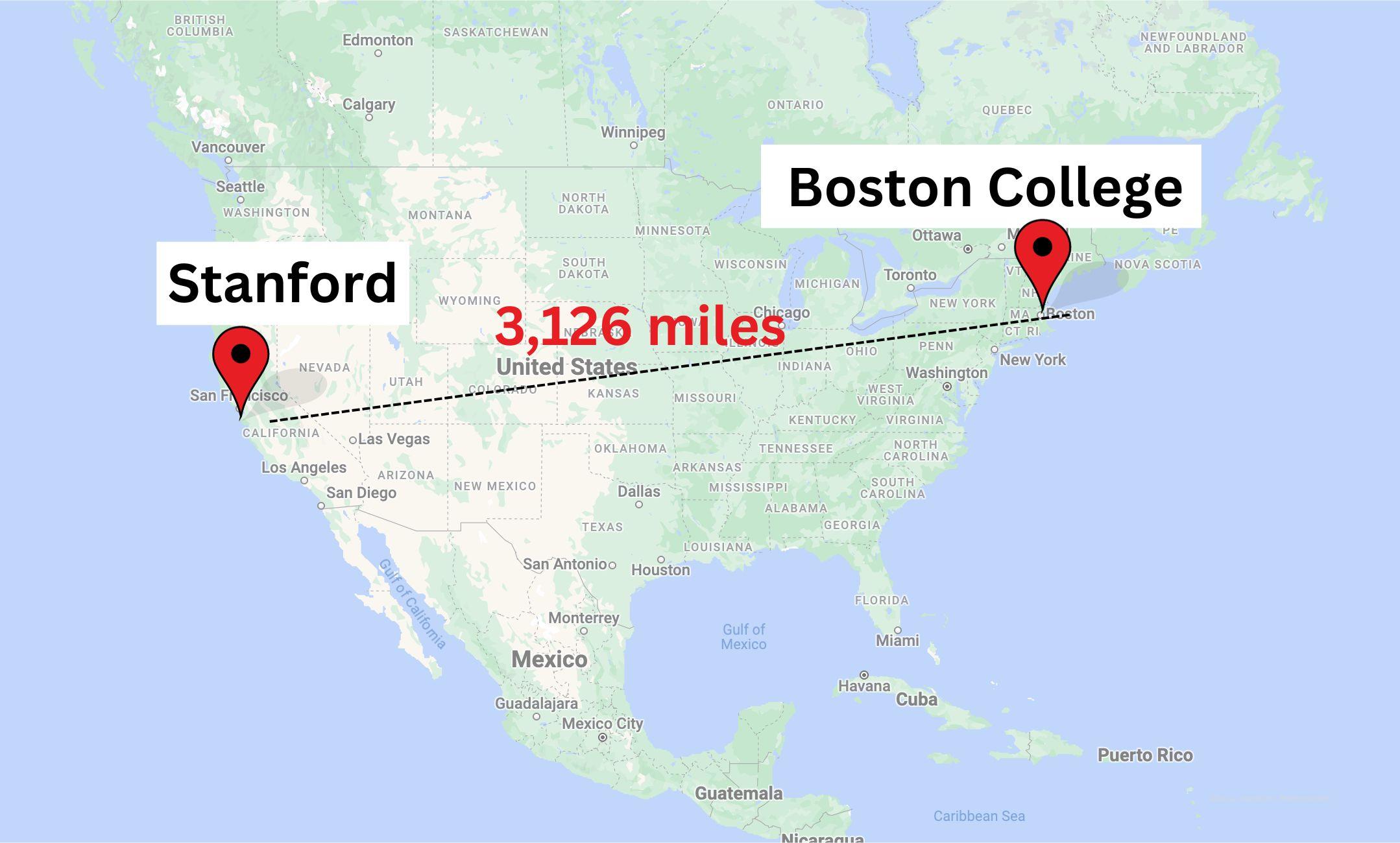
The biggest conference impacted by this phenomenon was the PAC-12, a formerly high-appealing conference for many high-level student-athletes now down to a meek two member schools, marking the end of the Power 5, PAC-12 era. The benefactor? The Big-10, receiving West Coast powerhouses UCLA, USC, Oregon, and Washington, and the ACC, receiving Stanford and Cal Berkley.
Minnehaha’s senior class has one student who will be directly affected by these changes.
Berit Parten is currently verbally committed to continuing her athletic and academic career at the University of Iowa, playing women’s soccer there. Parten’s perspective on the changes is simple, “I’m actually very excited. I think getting to play a variety of top-tier schools will be a great experience for anyone involved.”
For some, the idea of having a few thousand-mile gap between schools is appealing, but there are still many unknowns. For someone from the perspective of the outside looking in, it can seem like an intriguing idea.
Taylan Stinson, a Junior Cornerback for the SMB Wolfpack said, “I actually think it is very cool that a team like Minnesota could consistently be playing teams all over the place.”
Logistically one could argue that some of these changes make no sense, such as why are two California schools (that are on the Pacific Ocean), going to be playing in a conference called the Atlantic Coast Conference. Similarly, a formerly Midwest-centric Big-10 is now turned into more of a country-wide, extremely large conference.
“Why are we calling it the Big-10 if it’s not 10 schools anymore?” jokingly said Parten. However, she raises a valid point. There are not 5 power conferences anymore, instead, there are now four major conferences, not counting the Big East and the Ivy League.
Senior Trent Page, a verbally committed Yale football player looks at this from a different angle. “The Ivy has been self-sustaining since its inception. I doubt it impacts the Ivy League significantly,” Page remarked, “The stability the Ivy League models for its athletes should be something that other conferences should attempt to emulate.”
The most important question, why is this happening, seems to be the million-dollar question. The answer may seem simple, but the reality is that all of these changes are driven by money and television deals that conferences make with broadcasting networks.
According to USA Today, in the year 2022, the Big 10 led Power 5 conferences in total revenue, with each member school receiving nearly 60 Million dollars. The Pac-12 conference gave out the least amount of money to member schools, with each school receiving a mere 37 million dollars each, hence the turmoil following the 2022-2023 college athletic seasons.
There are many questions being asked about how these changes will actually affect athletes. How will this affect the mental health of athletes? How can schools afford travel expenses for every sports team? How can athletes get their homework done and be regular college students?
These are very fair questions that will continue to be asked, but the unfortunate truth is many of these cannot be answered until the athletes themselves experience it. Starting in the 2024-2025 season, many of these changes will be in full effect, until then it remains a mystery what the extent of all of these changes will affect the scope of college athletics.