

Climate change threatens megacities
Rising temps melt polar ice, causing sea levels to rise: the world’s huge coastal cities face a troubled future
Jakarta, the capital of Indonesia, is the fastest sinking city in the world. North Jakarta is 40% underwater — and South Jakarta isn’t far behind.
According to BBC, by 2050, 95% of North Jakarta will be entirely — entirely — submerged. Which is why Indonesia is planning to spend some $30 million dollars to rebuild the capital in the middle of an undeveloped countryside. From scratch. The new capital’s going to be called Nusantara, estimated to be finished by 2045.
“The country of Indonesia is moving the capital, which is currently in Jakarta, to a different island,” Nathan Johnson, MA teacher of AP European History, AP Human Geography, and Debate, said. “Part of that is due to sea level rise but there’s also just a massive amount of infrastructure and people that are built in the huge city of Jakarta.”
What problems does Jakarta face? Extreme weather, yes, and swamping, too.
When asked about the consequences of sea levels rising in coastal cities, Dr. Carmella Whaley, Upper School science teacher, said: “We would have flooding on roadways, and maybe in residential areas. It can be a loss of livelihoods, economies, suffering because of flooding, recreation,” Whaley said. “The water changes in such a way that you can’t enjoy the outdoors. Tourism would be another problem.”
Essentially, Jakarta is losing some of its primary industries. According to Dr. Whaley, one reason for the rising tides is extreme weather, and the other the melting of sea ice, such as the glaciers of Greenland.
Like from a NASA study; in the years of 2002 to 2023, Greenland lost somewhere around 270 billion metric tons of ice per year. In pounds: 595,248,107,899,170 lbs. For the record: One male elephant can weigh up to 14,000 pounds. 595 (and the extra) trillion lbs divided by 14,000 lbs is 42,517,721,992.8 lbs. That’s how many elephants are would be falling off of Greenland every year. 42 billion elephants.
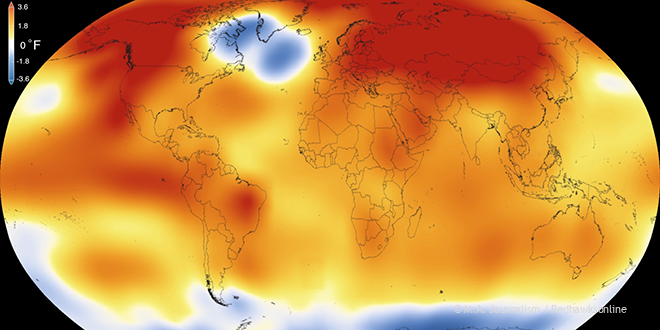
Not only does climate change melt glaciers, it affects oceanic currents that have circulated for millennia. Like the Atlantic Ocean current that makes the Northwest European countries (Ireland, Britain, France) and cities like London much warmer than they should be.
“The change in water as I understand it is really based on just the idea that cold air and cold water sink and hot air and hot water rises,” Whaley said. “If we have more heating of the surface water, less of that natural turbulence in the water would happen, so you would end up with more hot water at the top, and less of it being cooled and sinking.”
Additionally, animals’ natural habitats will be destroyed.
“With having less current, there’s going to be less mixing of the water. And that would mean probably lower oxygen content in the water,” Whaley said. “And that’s going to have a negative effect on the animals and plants that live within the body that need oxygen to live.”
The hotter the earth gets, the more animals will be in danger. Plus, Northwest Europe will grow colder, and the sea will come closer. What does a country do when a major epicenter of product and innovation succumbs to the sea?
“Let’s say that Shanghai and Tokyo and London and New York are dramatically changed by rising sea levels,” Johnson said. “I don’t even know what the result of that would be. Because those are cities that don’t have the majority of the global population but have a major impact on global functioning.”
New York City faces such a problem. The booming metropolis, increasingly threatened by climate change, is experiencing more flooding than ever before, and hurricanes are becoming stronger due to higher sea levels.
According to SeaLevelRise.org, from 1968 to 2016, 48 years, the sea rose 6 inches. In the next 14 years, from 2017 to 2031, the website predicted 6 more inches. And according to the Guardian’s article in May of 2023 on New York’s sea levels, in the years between 1950 and 2023, the sea levels had risen 9 inches, and also noted, like SeaLevelRise.org, that storms and hurricanes will be strengthened due to rising waters.
One option to solve (or stall) the sea rising would be to create reservoirs to store the excess water. Or biomimicry, “which is the idea of taking inspiration from nature to solve our problems,” Whaley said. “I think there are a lot of scientists, a lot of research, going into improving infrastructure.”
For example, how nature survives a flood. A third, last resort option would be to move.
“Is the city of New York so essential to the operation of the world,” Johnson said, “that we will just build walls around it? Sea walls to protect it? Or would that power center shift somewhere else? I don’t know.”
Most of the existing mega cities – cities like New York with over 10 million residents – around the world are in Southern and Eastern Asia. And a good number of them seem to be right near the sea. Like Tokyo, Japan. Or Guangzhou and Shanghai in China. Or New York. In 2020, Earth.com predicted that by 2100, 37% of Tokyo, will be flooded. 37% is 3 million people.
“Most people do not live in mega cities,” Johnson said. “But the world’s mega cities have a dominating impact on the global economy and culture and connections.”
According to the New York Times, by 2050, the world will have over 40 mega cities. And if one of them falls… well.
NASA’s sea level projection tool shows what the rising sea levels will be in years to come. Like in 2060 – where in the median range, waters have been estimated to rise by 0.28 meters, or eleven inches. In another study, NASA’s global climate change site depicts satellite data of sea levels. Since 1993, NASA’s seen 99.8 millimeters of ocean risings. Approximately 3 inches. If in 30 something years (since 1993), levels have risen by 3 inches, and by 2060, in 40 years, levels will have risen by 11 inches, rising sea levels will be more than tripling.
An official estimate of Jakarta’s population is 11,000,000. Then there’s the 30,000,000 people living on the outskirts and neighborhoods surrounding the capital. That’s a lot of people with nowhere to go in the near future.
“One concerning effect of moving the capital is that they are moving it to the island of Borneo, which has been a much more environmentally pristine island.” Johnson said. “Jakarta is on the island of Java, which is just packed with people. It’s not an environmentally pristine island. Borneo is where you find the big populations of orangutans and rainforest.”
“If they move the capital to Borneo, which they are doing in order to get it out of Jakarta,” Johnson said, “that will lead to a lot of development on the island of Borneo, which environmentally will probably not be a good thing.” But what other choices do they have?
MA students and their families happen to be living in an environmentally safe state. But this does not mean that Minnesota is not exempt from the effects of climate change.
“I think the thing that’s difficult for people is that, for many of us, the costs of climate change happen occasionally,” Johnson said. “For example, hurricanes have more force than they used to, and therefore are more destructive. But a particular community, like Houston, might only deal with such a hurricane once every 30 years. Now when it does arrive, the costs are massive.”
But how does Minnesota deal with climate change? What can a Minnehaha Academy student do to help our planet?
“Carpooling is always number one. Ride your bike more,” Whaley said. “And just being aware, knowing your surroundings and paying attention to the news and learning about how you can take care of things that way. Recycling.”
“Of course,” Whaley said, “All the simple things that you think of down the road have an impact.”
“Stopping climate change would be extraordinarily expensive,” Johnson said. “But to deal with the impact is also expensive.”
For people who say we can’t afford it, the fact is that we can’t afford not to.